Best Apollo alternatives for B2B contact data.
Apollo is a strong all-in-one option for prospecting and sales engagement, but not every team wants contact data tied to sequencing, dialer workflows, credits, and a larger GTM workspace. These Apollo alternatives are worth considering if you want cleaner data workflows, simpler exports, or a different buying motion.
The best Apollo alternative depends on what you are replacing. If you need sequencing and a sales workspace, compare engagement platforms. If you mostly need verified contacts, company coverage, exports, API access, and AI-agent workflows, evaluate data-first tools more heavily.
Best fit when Apollo feels too broad for the job. Argorant is designed as a focused contact-data layer for teams that already have a CRM, sender, automation stack, or agent workflow and mainly need reliable people data.
Worth evaluating when the team wants a broader enterprise suite and has budget for a quote-led buying motion. Compare contract scope, exports, enrichment, intent, and data governance requirements.
Relevant when European coverage, compliance posture, and phone-data workflows matter. Buyers should verify package limits and target-market coverage directly.
Often evaluated by teams that want to capture prospects from browser workflows and move them into existing outbound systems. Compare data depth, export limits, and CRM behavior.
A lighter alternative for contact lookup and basic prospecting. Credit rules, phone/email split, and data freshness should be tested on your own account sample.
Narrower than Apollo and usually not a sales engagement replacement. Useful when email discovery and verification matter more than sequences or a full prospecting workspace.
Apollo is popular because it bundles a lot into one product: data, search, enrichment, sequences, dialer workflows, AI research, integrations, and now MCP. That breadth is useful when an SDR team wants to live in one workspace.
The same breadth can be unnecessary when the team already has a sender, CRM, enrichment stack, or custom automation. In those cases, the buyer is not really replacing Apollo's full platform. They are replacing the contact-data part, the export workflow, or the credit model around reveals and enrichment.
Do not compare Apollo alternatives by homepage claims. Compare them on one repeatable sample: 25 companies, three target titles, two countries, and one outbound workflow. Measure relevant contacts found, verified emails, stale titles, duplicate people, export fields, and how much manual cleanup is required.
Then price the result by usable output. A platform with a lower seat price can become expensive if credits, add-ons, limited exports, enrichment fees, or workflow friction reduce the number of contacts your team can actually use.
Choose Argorant when you want the data layer without the full sales engagement layer. That is especially relevant for agencies, founders, GTM engineers, RevOps teams, and AI SDR builders who want verified contacts and programmatic access more than another place to manage sequences.
Argorant's public pages and free tools are meant to show aggregate coverage without exposing real people publicly. Real contact reveal, export, and automation belong behind login, quotas, and account controls.
Apollo may be the better choice if the team wants a single day-to-day workspace for prospecting, email sequences, dialer usage, enrichment, and CRM handoff. If the team would otherwise need to assemble several tools, Apollo's all-in-one approach can be operationally simpler.
Apollo also has an official MCP connector. If your team already uses Apollo and wants Claude to search, enrich, create contacts, or manage sequence handoff, that existing connector is a real advantage. The diligence is to confirm plan limits, credit usage, and whether your specific automation pattern is allowed.
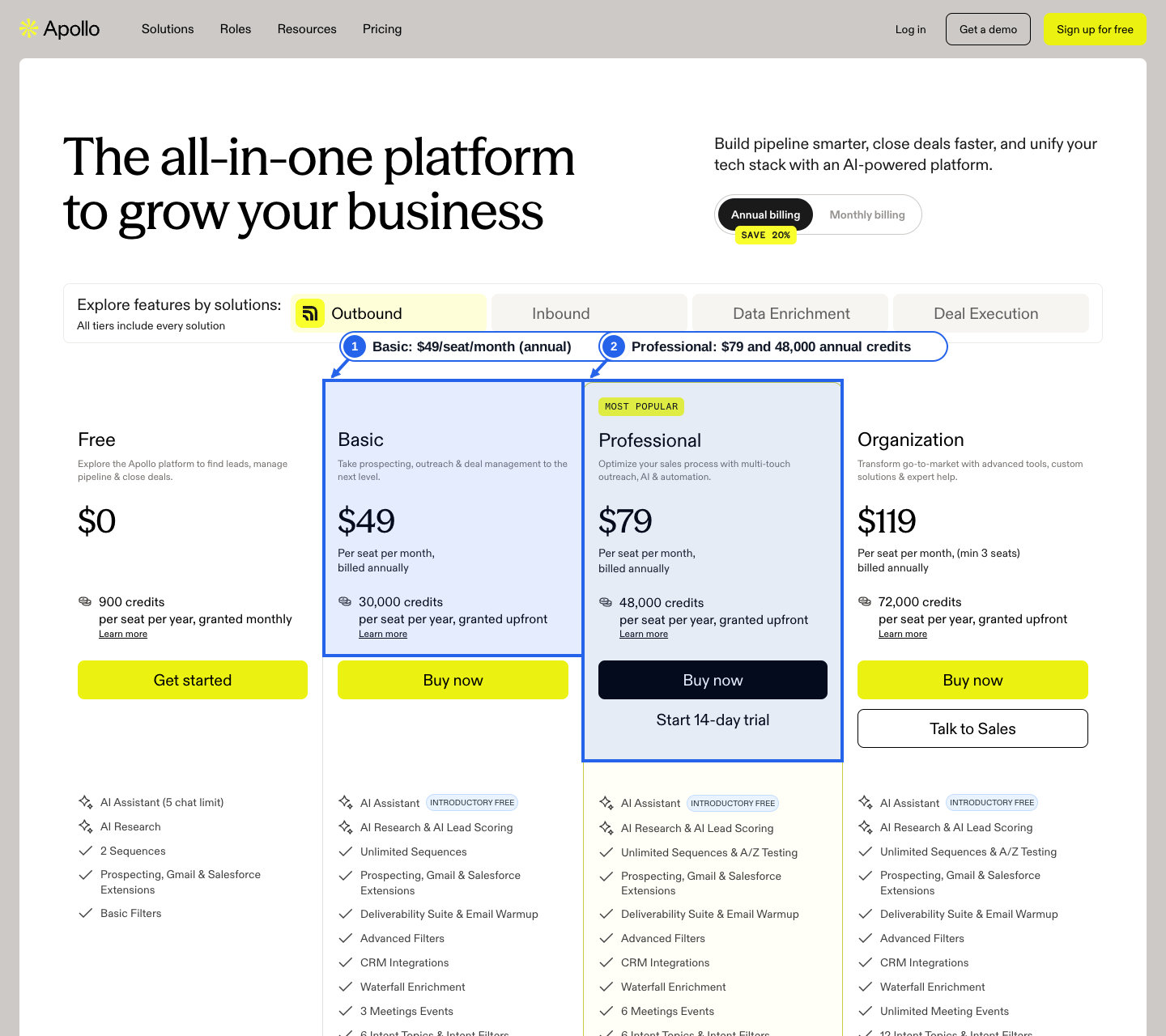
Apollo's own documentation explains that credits can be consumed by verified emails, phones, enrichment, API usage, AI research, dialer activity, domains, mailboxes, and add-ons. That makes the model flexible, but it also means buyers should forecast usage instead of only comparing plan names.
For many teams, the cleanest comparison is not Apollo versus every alternative in the abstract. It is Apollo's expected credit burn versus the cost of getting the same number of verified, export-ready contacts from a focused data provider.
For a focused verified-contact data layer, Argorant is the most direct Apollo alternative. For enterprise GTM intelligence, ZoomInfo may be relevant. For EMEA-heavy coverage, Cognism is often evaluated. For email finding, Hunter is narrower but useful.
Common reasons include wanting a narrower data workflow, different credit/export economics, cleaner verification, less sales-engagement complexity, or a more programmable data layer for API and MCP workflows.
If Apollo runs sequences and daily SDR workflows, supplementing may be safer. If your team mostly uses Apollo to find contacts and export lists, a focused alternative can replace more of the workflow.
Use the same account sample, target titles, countries, and export workflow. Compare usable verified contacts, stale data, duplicate records, export fields, credit usage, and time to get the list into your next system.
Official pricing entry point; buyers should verify current plan names, credits, add-ons, and contract terms directly with Apollo.
Official explanation of credit usage for emails, phones, enrichment, API usage, AI research, domains, mailboxes, and dialer activity.
Official API overview describing people search, enrichment, company data, OAuth partner flows, and plan-gated API access.
Official API pricing note explaining that advanced API access depends on the Apollo plan and that search/enrichment endpoints consume credits.
Official Apollo MCP documentation describing Claude connector workflows, available tools, credit usage, and plan limits.
Search verified contacts, export a clean list, and see whether Argorant fits your workflow before committing to a larger platform.
Start free