Apollo vs ZoomInfo
Apollo and ZoomInfo are both major B2B data platforms, but buyers usually evaluate them for different operating motions. Apollo is closer to a sales engagement workspace with data, sequencing, enrichment, and AI workflows. ZoomInfo is the larger enterprise go-to-market intelligence suite with a quote-led buying motion and broader account-intelligence surface.
Choose Apollo when your team wants prospecting data and outbound execution in the same daily workflow. Choose ZoomInfo when you have enterprise budget, procurement support, and a broader need for go-to-market intelligence across sales, marketing, operations, enrichment, intent, and account planning. If your actual job is narrower than either platform, use Argorant as the focused verified-contact layer before committing to a larger suite.
Apollo is stronger when reps need one place to search accounts, save contacts, run sequences, use AI research, and hand work into a CRM or engagement process.
ZoomInfo can support SDR research, but its center of gravity is broader enterprise intelligence and data operations rather than a single lightweight SDR workspace.
Apollo can cover many prospecting and enrichment jobs, especially when sales engagement is part of the workflow.
ZoomInfo is usually stronger when multiple GTM teams need company data, contact data, enrichment, intent, operations workflows, and procurement-ready vendor maturity.
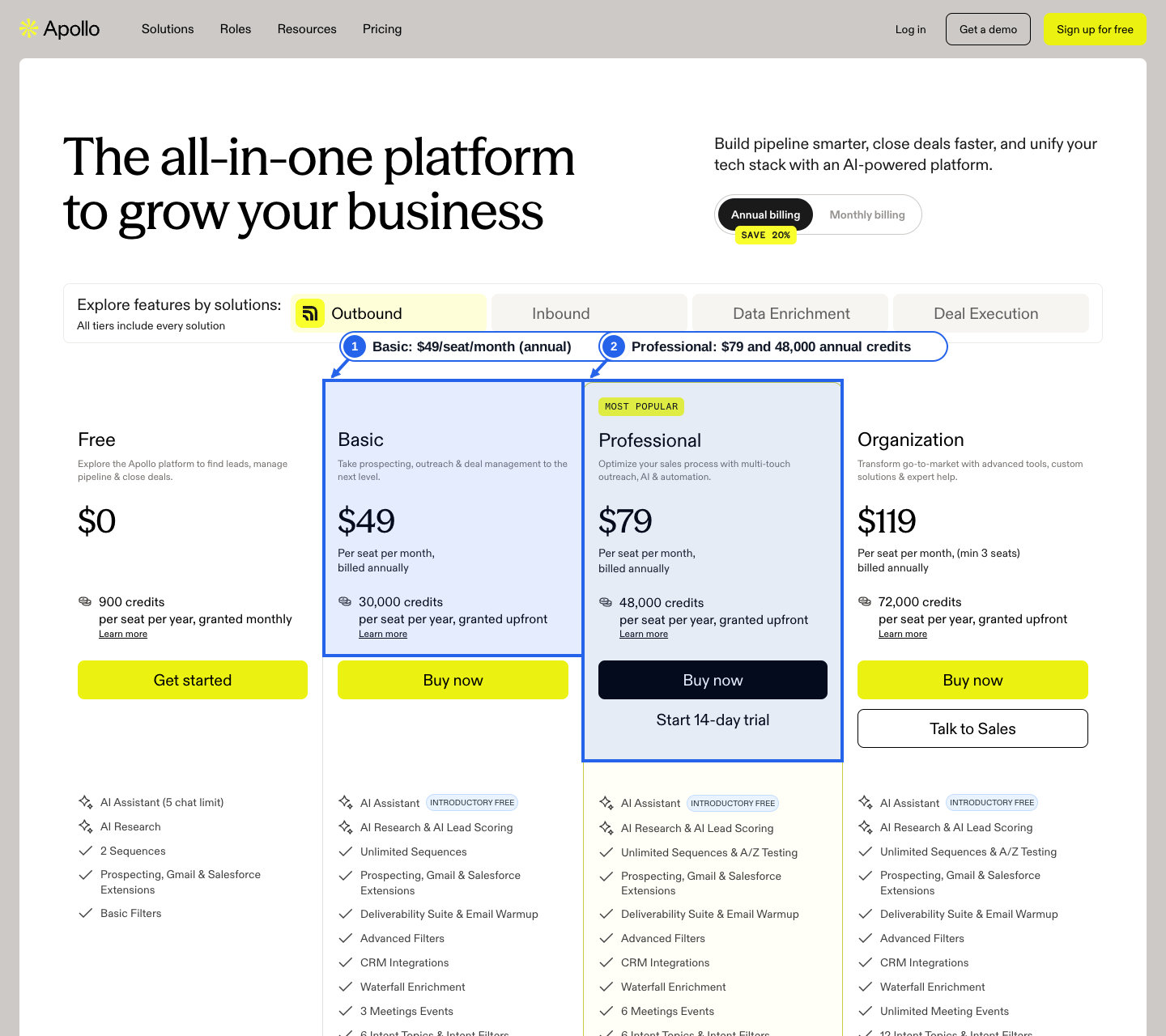
Apollo publishes a pricing entry point, but buyers still need to model credits, export credits, add-ons, API usage, AI research, dialer usage, domains, and mailboxes.
ZoomInfo is quote-led. Buyers should verify seats, credits, modules, renewal terms, exports, API rights, and any usage limits directly in the contract.
Apollo has an official Claude integration and MCP surface where existing Apollo permissions, plan limits, and credit balance still apply.
ZoomInfo has mature integrations and an enterprise platform story, but buyers should ask exactly how API access, automation, exports, and agent use are allowed.
| Area | Apollo | ZoomInfo | Buyer note |
|---|---|---|---|
| Product center | Sales engagement workspace with B2B data, sequences, enrichment, dialer, AI research, and MCP/Claude workflows | Enterprise go-to-market intelligence suite spanning sales, marketing, operations, enrichment, intent, and account planning | The right tool depends on whether the team wants a daily SDR operating system or a broader GTM data suite. |
| Pricing motion | Public pricing page, but credits and feature gates still need careful modeling | Quote-led pricing with contract terms that vary by seats, credits, modules, and negotiation | Do not compare only plan names. Compare cost per usable exported contact and workflow outcome. |
| Credit and usage model | Credits can apply to phones/emails, enrichment, API usage, AI research, warmup, domains, mailboxes, and dialer workflows | Buyers should confirm export limits, credit allocations, enrichment usage, phone access, API rights, and renewal terms in writing | Credit models become expensive when a team scales automation without forecasting usage first. |
| AI-agent readiness | Published Claude connector workflow with natural-language people/company search, enrichment, sequence actions, and analytics | Evaluate contract/API terms and whether automated data access is permitted for your use case | Agent access is no longer a side feature. It changes how fast teams consume credits and exports. |
| When Argorant enters the shortlist | Use Argorant when you mainly need verified contacts, company coverage, export-ready lists, and MCP/API access without buying a full engagement suite | Use Argorant alongside or instead of ZoomInfo when the enterprise suite is heavier than the actual list-building job | A focused data layer can be the right answer when the sending, CRM, and automation stack already exists. |
Public pricing entry point with a free plan and paid plans, plus a credit model that affects reveals, enrichment, exports, API usage, AI research, dialer activity, domains, and mailboxes.
Apollo's own docs say advanced API access depends on plan, many API endpoints consume credits, and Claude usage runs on existing permissions, plan limits, and credit balance.
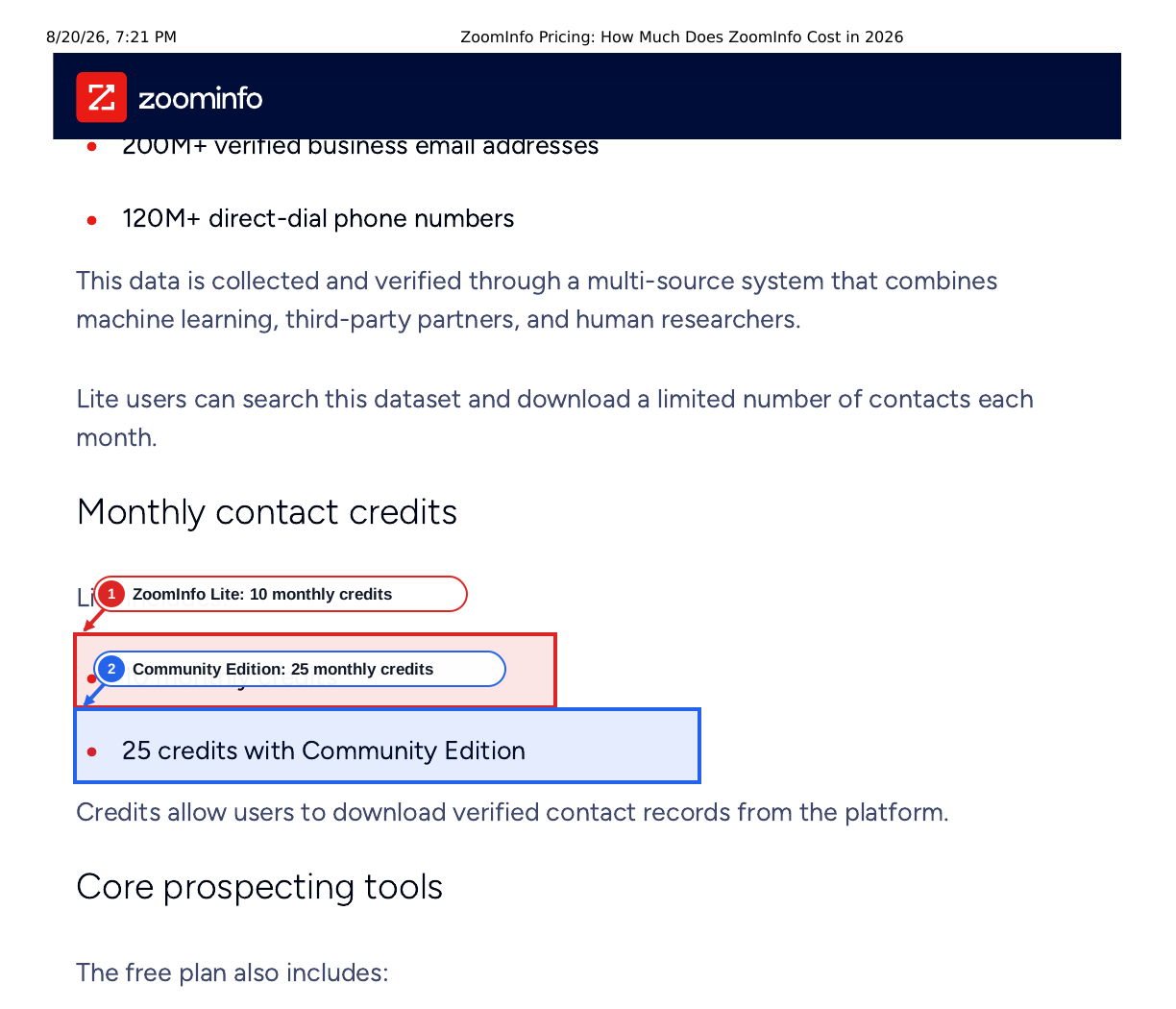
Quote-led enterprise pricing. The official pricing page routes buyers toward sales contact or trial flow rather than publishing a simple plan grid.
Budgeting should be done from a real quote. Seats, modules, data clouds, credits, exports, APIs, renewal language, and contract term can materially change the deal.
Apollo versus ZoomInfo is not just a database-size comparison. It is a workflow decision. Apollo is easier to understand as a workspace for prospecting and execution: search for people and companies, save contacts, enrich records, run sequences, use sales engagement features, and increasingly hand work to AI.
ZoomInfo is easier to understand as an enterprise go-to-market intelligence layer. The buyer is usually comparing how sales, marketing, operations, enrichment, intent, account planning, and governance fit into one vendor relationship. That can be valuable when a mature organization wants one platform across several departments.
Apollo gives buyers a public pricing path, but the real cost still depends on usage. Apollo documents credits for phone or email access, enrichment, API usage, AI research, warmup, generated domains and mailboxes, and dialer workflows. That makes Apollo flexible, but it also means teams should forecast the workflow before choosing a plan.
ZoomInfo is more sales-led. Its official pricing page is not a transparent self-serve plan grid, so buyers need to ask for every limit in writing: seats, credits, modules, exports, direct dials, enrichment, API use, renewal uplift, cancellation language, and automation rights.
Apollo wins when a sales team wants one product for daily outbound execution. If reps are expected to build lists, use AI research, sequence prospects, call, enrich, and move activity through a CRM-adjacent workflow, Apollo's all-in-one shape can reduce tool switching.
Apollo also has an explicit AI-agent surface. Its Claude integration documentation describes natural-language people and company search, enrichment, contact updates, sequence actions, and analytics. That is strategically important because AI workflows consume data faster than human click paths.
ZoomInfo wins when the buying committee needs a broader enterprise GTM platform. A company with defined territories, RevOps ownership, multiple departments, intent-data workflows, enrichment operations, and mature procurement may prefer one larger vendor even if the buying cycle is heavier.
ZoomInfo can also be easier to justify when data governance and executive accountability matter more than fast self-serve onboarding. Enterprise buyers often care about support, contracting, security review, procurement history, and integration depth as much as the raw data search UI.
Not every team comparing Apollo and ZoomInfo needs either platform's full surface area. Many teams simply need reliable people data: the right company, the right department, the right title, a verified email, export controls, and a way for humans or agents to use the data safely.
That is the Argorant opening. If your CRM, sender, sequencing tool, enrichment chain, or custom AI SDR workflow already exists, a focused verified-contact layer can be easier to budget and operate than another broad platform.
Use the same account sample in both products: 25 target companies, three buying-committee titles, two countries, and one export destination. Count relevant contacts found, verified emails, phone availability, stale titles, duplicate records, export fields, and time to move the result into the next workflow.
Then calculate cost per usable exported contact. Database claims, plan names, and feature checklists matter less than how many records your team can legally use, confidently contact, and operationally move without surprise credit burn.
Apollo is usually easier to evaluate from public pricing, but the final operating cost depends on credits, add-ons, API usage, exports, AI research, dialer usage, domains, and mailboxes. ZoomInfo is quote-led, so buyers need a direct quote to compare accurately.
Apollo has a visible Claude/MCP workflow and can be strong if your AI SDR should also interact with Apollo's sales workspace. Argorant is better positioned as a focused data layer when your agent mainly needs verified contacts and company coverage. ZoomInfo buyers should verify API and automation rights directly.
Choose ZoomInfo when the team needs a broader enterprise GTM intelligence platform across sales, marketing, operations, enrichment, intent, account planning, and governance. Choose Apollo when prospecting and engagement in one workspace matter more.
Because many buyers do not need a full engagement suite or enterprise GTM platform. If the job is verified contact data, exports, API access, and agent-ready lookup, Argorant can be the narrower tool to test first.
Official pricing entry point; buyers should verify current plan names, credits, add-ons, and contract terms directly with Apollo.
Official explanation of credit usage for emails, phones, enrichment, API usage, AI research, domains, mailboxes, and dialer activity.
Official API overview describing people search, enrichment, company data, OAuth partner flows, and plan-gated API access.
Official API pricing note explaining that advanced API access depends on the Apollo plan and that search/enrichment endpoints consume credits.
Official Apollo MCP documentation describing Claude connector workflows, available tools, credit usage, and plan limits.
Official pricing entry point; buyers should verify current package and contract details directly with ZoomInfo.
Company-filed description of ZoomInfo's platform, subscription model, and business context.
Third-party 2026 pricing estimate; useful for directional buyer research, not a substitute for a direct quote.
Third-party 2026 estimate and purchase-data summary for ZoomInfo SalesOS.
Search verified contacts, check coverage, and export a clean list before deciding which platform belongs in your stack.
Start free