Comparison

Apollo vs Argorant

Apollo combines B2B contact data with sales engagement, sequencing, enrichment, and a growing AI/MCP surface. Argorant is the focused alternative for teams that want verified contacts, transparent plans, clean exports, and agent-ready data workflows without buying a full sales engagement platform.

Bottom line

Choose Apollo when you want prospecting data and outbound engagement in the same operating system. Choose Argorant when the job is narrower but more data-centric: find the right people, verify the contacts, export clean lists, and let humans or AI agents work from a reliable contact layer.

Outbound teams that need sequencing
Argorant

Fits when sequencing already lives in another tool and the team mainly needs cleaner contact data and exports.

Apollo

Apollo is stronger when the team wants database search, email sequences, dialer workflows, and sales engagement in one product.

Credit-sensitive list building
Argorant

Built around visible plans, export controls, and verification-focused workflows so teams can reason about usable contacts.

Apollo

Apollo uses credits across emails, phones, enrichment, API usage, AI research, and other workflows; buyers need to model usage carefully.

AI-agent workflows
Argorant

MCP is part of the product direction, with public-safe counts and redacted previews before reveal/export.

Apollo

Apollo has an official Claude MCP connector, but enrichment uses credits and plan/API limits still apply.

Data layer versus sales platform
Argorant

Better fit when you want a focused data layer that plugs into your stack, CSV process, API, or custom agent.

Apollo

Better fit when you want contact data bundled with engagement, CRM-adjacent workflows, dialer features, and AI research.

Scorecard
AreaArgorantApolloBuyer note
Product center of gravityVerified B2B contact data, exports, API, MCP, and workflow handoffContact data plus sales engagement, sequences, dialer, enrichment, and AI researchApollo can replace more sales workflow tools; Argorant is designed to be a sharper contact-data layer.
Pricing clarityPublic Free, Starter, Pro, and Business tiersPublic pricing entry point with credits, add-ons, trials, and custom enterprise optionsApollo buyers should check which actions consume credits and whether API/export requirements fit the plan.
Credits and exportsEvaluate by usable verified contacts and export-ready listsCredits can apply to emails, phones, enrichment, API use, AI research, dialer activity, domains, and mailboxesThe operational comparison is cost per usable contact, not just sticker price per seat.
MCP and automationPublic-safe MCP direction with OAuth, quotas, counts, and redacted previewsOfficial Apollo connector for Claude with search, enrichment, contact, company, and sequence toolsApollo search can be free in the connector, while enrichment consumes credits and plan limits still apply.
Verification postureVerification-first messaging around export-time deliverability and clean list outputLarge database and enrichment engine with credit-based reveal/enrichment mechanicsTest the same role/company sample in both systems before judging deliverability.
Argorant pricing

Free plan, Starter from $99/month, Pro from $249/month, and Business from $579/month before annual discounts.

Public plans make the baseline buying motion easy to model. Larger API, export, or admin needs can still move into a Business conversation.

Apollo pricing

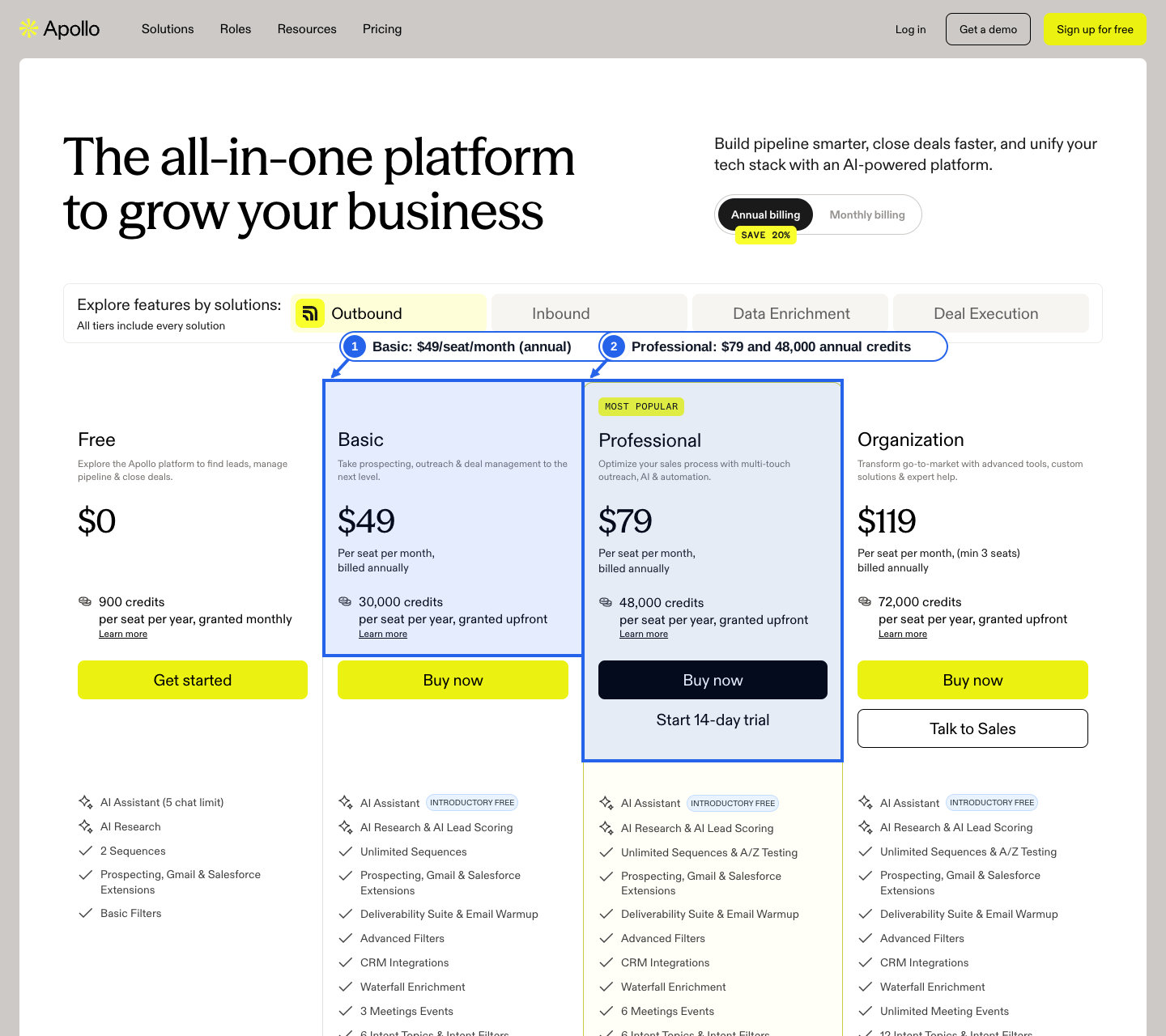
Public pricing entry point with free/trial paths, paid plans, credits, add-ons, and custom options for larger enterprise needs.

Apollo's official credit docs matter as much as the plan page: emails, phones, enrichment, API usage, AI research, dialer activity, and add-on credits can affect the real operating cost.

The practical difference

Apollo is a go-to-market workspace. A team can search for prospects, save contacts, run sequences, use a dialer, enrich records, and connect parts of the workflow to CRM and AI features. That is attractive when the team wants one central tool for daily SDR execution.

Argorant is a data-first workflow. The product promise is simpler: find the right contacts, understand coverage, verify what you export, and move clean data into the system where your team already works. That makes it less of an Apollo clone and more of a focused alternative for teams that do not want their data layer tied to a full engagement suite.

Pricing and credits

Apollo's pricing cannot be judged from the plan grid alone. Apollo's own help center explains that credits are used across several actions, including requesting verified emails or phones, enrichment, API usage, AI research, dialer activity, purchased domains, and mailboxes. That does not make the model bad; it means teams need to calculate expected usage before choosing a plan.

Argorant should be evaluated differently: how many usable, verified contacts can the team export for the money, and how much friction exists between search, reveal, verification, and export? If the workflow is mostly data extraction and verification, the narrower system can be easier to budget and operate.

Where Apollo is stronger

Apollo is stronger when a team wants prospecting and engagement in the same product. If SDRs are expected to build lists, write sequences, send campaigns, manage touches, use a dialer, and track activity from one browser workflow, Apollo is a natural shortlist candidate.

Apollo also has a very visible AI-agent move: its MCP documentation describes a Claude connector with people search, company search, enrichment, contact management, company research, and sequence operations. Buyers who want agentic workflows should still check which tools are free, which consume credits, and which plan limits apply.

Where Argorant is stronger

Argorant is stronger when the buyer wants the data layer separated from the engagement layer. Agencies, founders, RevOps operators, and technical outbound teams often already have tools for sending, CRM, enrichment chains, or custom automation. In that setup, buying a full engagement suite can add unnecessary workflow weight.

The sharper question is whether Argorant can give the team a cleaner list faster: target companies, relevant departments, masked public previews, verified emails after sign-in, export caps, quotas, and an API/MCP path that is built around account controls.

How to test both tools

Pick 25 target companies, three roles, two countries, and one export workflow. Run the same sample through both platforms. Count how many relevant contacts appear, how many are verified, how many can be exported, how many duplicates or stale titles show up, and how long it takes to move the list into the next tool.

Then price the result as cost per usable contact. Seat pricing, database size, and feature lists matter less than the number of records your team can actually use without breaking deliverability, budget, or workflow constraints.

The MCP implication

Apollo's official MCP connector validates the category: sales data is moving from click-heavy browser workflows into agent-accessible infrastructure. That is good news for Argorant, not a reason to avoid the category.

The opportunity for Argorant is to be the clean, focused, public-safe data provider for AI SDR builders: free install, OAuth-gated access, quotas, redacted previews by default, and verified exports when the account has permission. The platform that makes data easy for both humans and agents will have an advantage over tools that only optimize the browser UI.

Evaluation checklist
Ask for seats, credits, exports, phone access, API access, and renewal terms in writing.
Run both products on the same target-account sample before judging coverage.
Check catch-all handling, invalid email handling, and whether re-checks cost extra.
Compare cost per usable exported contact, not only headline database size.
Confirm CRM, CSV, API, and AI-agent workflows before committing.
Decide whether you need a focused data workflow or a broader enterprise GTM suite.
Frequently asked questions
Is Argorant an Apollo replacement?

It depends on the workflow. Argorant can replace Apollo for teams that mostly use Apollo for contact search, verification, and exports. Apollo is broader if you also need sequences, dialer workflows, AI research, and sales engagement in one platform.

Does Apollo have MCP?

Yes. Apollo publishes MCP documentation for a Claude connector with search, enrichment, contact, company, and sequence workflows. Apollo states that plan limits and credits still apply to connector usage.

Which is easier to budget?

Argorant is easier to model when the job is verified contact data and exports. Apollo can still be cost-effective, but buyers need to account for credits, add-ons, API access, enrichment, dialer usage, and the exact workflows their team will run.

Which is better for AI SDR workflows?

Apollo has an official MCP connector and a broader sales workspace. Argorant is being shaped as a focused verified-data layer for AI agents, with OAuth, quotas, and redacted previews before reveal/export.

Try Argorant before you enter a sales cycle.

Search verified contacts, check coverage, and export a clean list before deciding which platform belongs in your stack.

Start free