Comparison

ZoomInfo vs Apollo vs Argorant

ZoomInfo, Apollo, and Argorant solve overlapping B2B data problems, but they are not the same kind of buying decision. ZoomInfo is the enterprise GTM intelligence suite. Apollo combines prospecting data with sales engagement. Argorant is the focused verified-contact layer for teams that want clean exports, public-safe previews, API access, and MCP-ready workflows.

Bottom line

Choose ZoomInfo when one enterprise vendor needs to support sales intelligence, enrichment, intent, RevOps, procurement, and broader GTM workflows. Choose Apollo when your reps need contact data and outbound engagement in one daily workspace. Choose Argorant when the core job is narrower: find the right people, verify contacts, export clean lists, and let humans or agents use data without buying a full GTM suite.

Enterprise GTM suite vs focused data layer
Argorant

Argorant is strongest when the buying team already has a CRM, sender, sequencing tool, or custom automation and mainly needs verified contact data with clean export and API/MCP access.

Apollo / ZoomInfo

ZoomInfo is the broader enterprise suite; Apollo is the broader rep workspace. Both can be right when the team wants more than a contact data layer.

Budget and buying motion
Argorant

Argorant is easier to evaluate when visible plans, free tools, export caps, and self-serve onboarding matter more than procurement-heavy platform consolidation.

Apollo / ZoomInfo

Apollo has public pricing but a credit model that needs forecasting. ZoomInfo is more quote-led, so the real comparison depends on contract terms, seats, modules, and usage rights.

AI SDR and agent workflows
Argorant

Argorant should be tested as a data infrastructure layer: OAuth-gated MCP, quotas, aggregate counts, redacted previews, and account-controlled reveal/export.

Apollo / ZoomInfo

Apollo has an official MCP/Claude direction. ZoomInfo buyers should confirm API access, automation rights, export limits, and contract permission for agentic usage.

Cost per usable contact
Argorant

Argorant should win when the team can get enough verified, export-ready contacts without paying for unrelated engagement or enterprise GTM modules.

Apollo / ZoomInfo

Apollo and ZoomInfo can win when the bundled workflows replace other tools or create enough rep productivity to justify the larger operating surface.

Scorecard
AreaZoomInfoApolloArgorantBuyer note
Product centerEnterprise GTM intelligence: contact data, company data, enrichment, intent, operations, and account workflows.Prospecting and sales engagement workspace: database search, enrichment, sequences, dialer, AI, and MCP/Claude workflows.Verified B2B contact data layer: public-safe previews, export-ready contacts, API access, and MCP direction.These products overlap, but they are not interchangeable operating systems.
Pricing motionQuote-led. Buyers need contract-level detail on seats, credits, modules, renewals, exports, API, and automation.Public pricing entry point, but credits and add-ons can materially change the real operating cost.Visible entry plans and a narrower data workflow, with larger API/export needs handled through higher plans.Do not compare plan names. Compare the cost of the exact workflow your team will run.
AI-agent readinessEvaluate API and automation terms directly; do not assume every browser workflow can be delegated to an agent.Official MCP/Claude documentation validates agentic sales workflows, with plan limits and credits still applying.OAuth-gated MCP with counts and redacted previews first; reveal and export remain account-controlled.Agent access changes quota planning because software can consume lookups faster than reps.
Data quality testTest role coverage, enrichment fields, phone access, stale titles, and export terms in your market sample.Test verified emails, credit burn, enrichment cost, duplicate handling, and sequence handoff.Test verified contacts, public-safe company coverage, export quality, and whether API/MCP access fits the workflow.Use the same 25 accounts, target titles, countries, and export destination across all three.
Best fitBest when a mature revenue organization wants one enterprise GTM data vendor across several teams.Best when SDRs need data and outbound execution in one daily workspace.Best when the team wants the data layer separated from engagement and automation tools.The best fit depends on whether you are buying a suite, a workspace, or a data layer.
ZoomInfo pricing

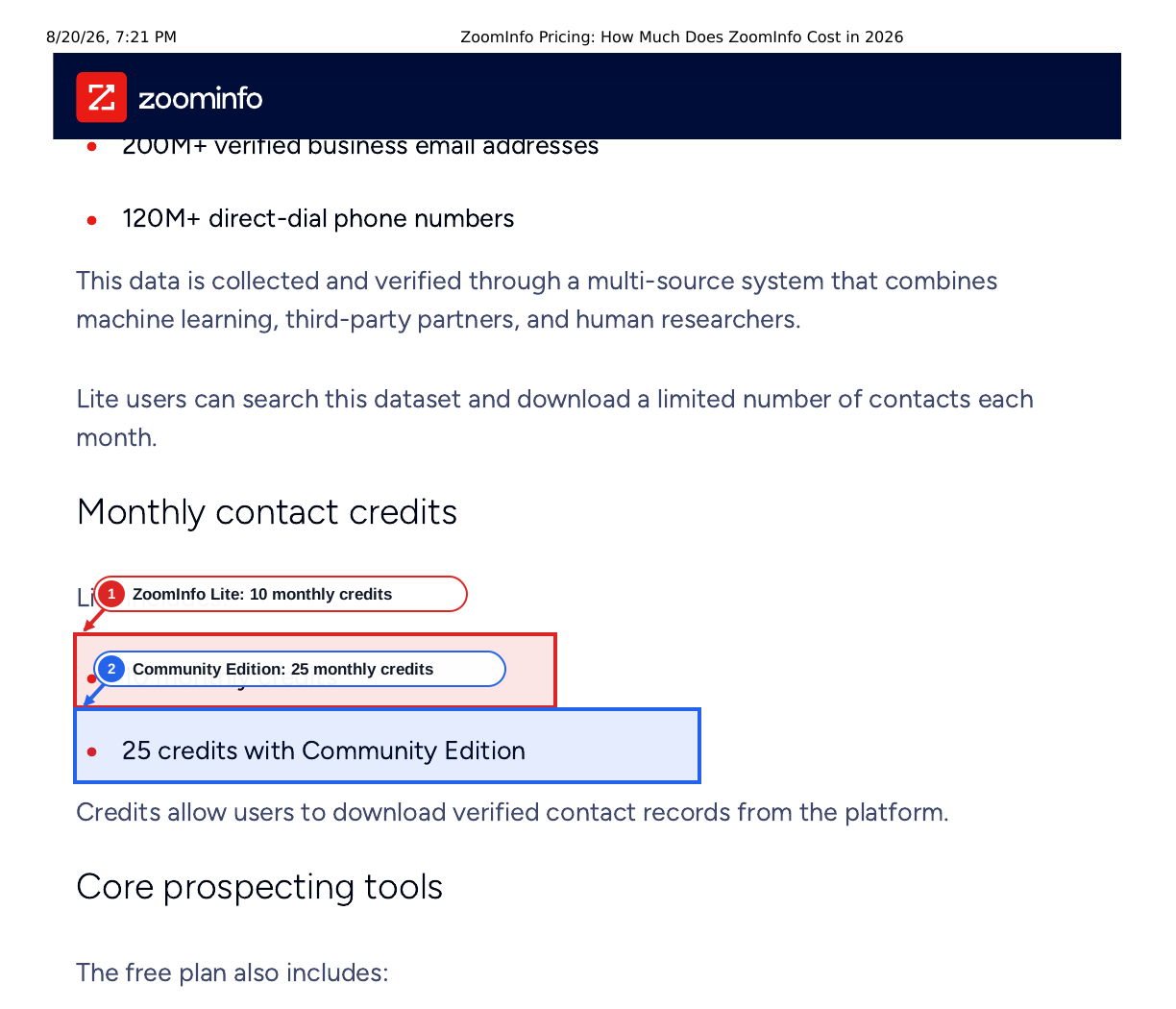
Quote-led subscription contracts. Public buyers should treat third-party pricing estimates as directional until ZoomInfo provides a current quote.

Ask for seats, modules, export allowances, direct dial access, enrichment usage, API rights, renewal language, cancellation terms, and automation permissions in writing.

Apollo pricing

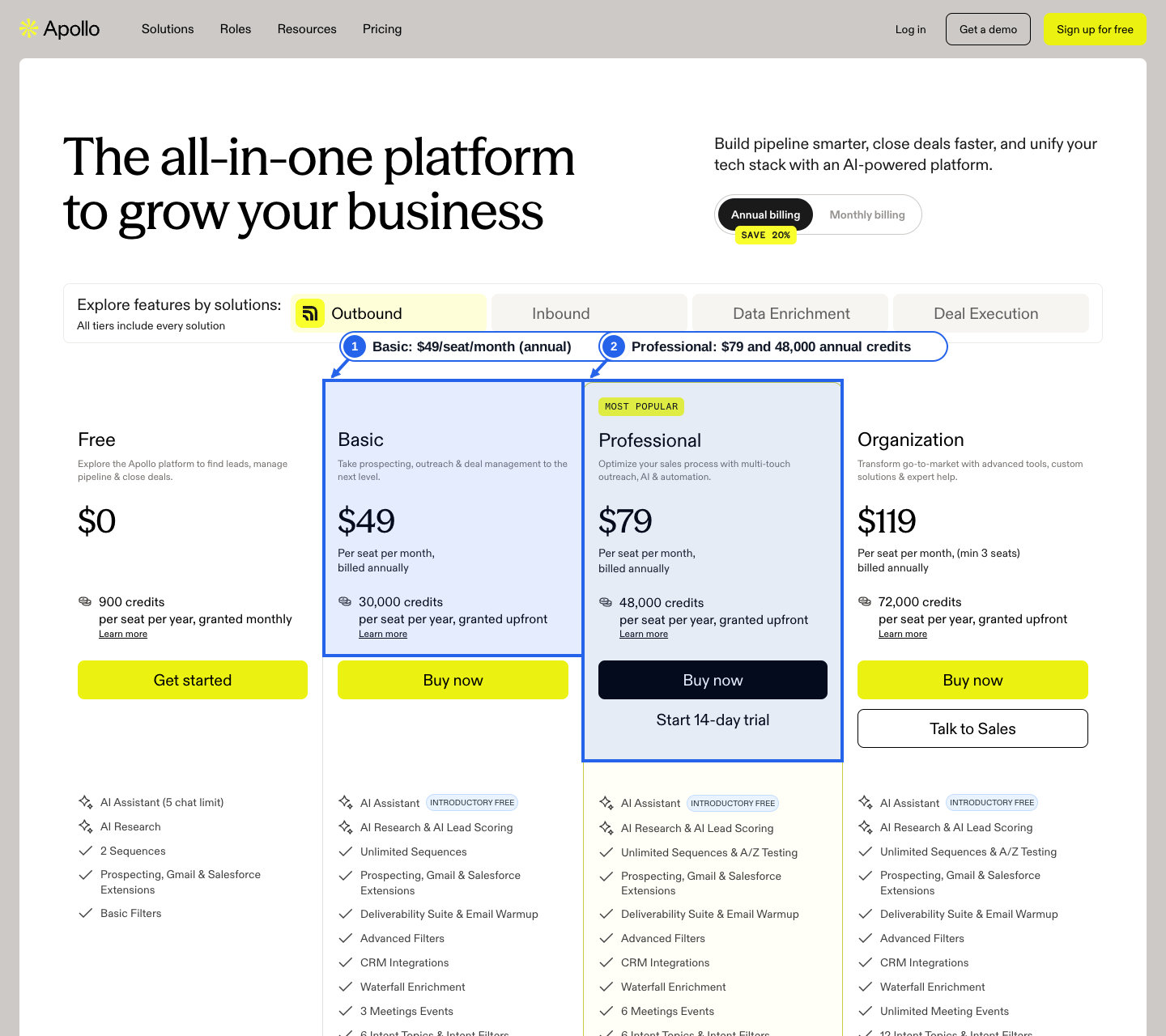
Public pricing entry point with plan tiers, credits, trials, add-ons, and custom options for larger teams.

Apollo's credit docs matter: emails, phones, enrichment, API usage, AI research, dialer activity, domains, mailboxes, and add-ons can all affect cost.

Argorant pricing

Public entry plans with a narrower verified-contact workflow and account-controlled reveal/export mechanics.

Argorant should be priced against usable verified contacts, export quality, API/MCP access, and whether it avoids paying for unrelated suite features.

The real decision is suite, workspace, or data layer

A buyer comparing ZoomInfo, Apollo, and Argorant is usually not deciding between three identical databases. They are deciding what layer should own the workflow. ZoomInfo is the suite choice: useful when multiple GTM teams need a large vendor relationship, enrichment, intent, contact data, company data, operations workflows, and procurement support.

Apollo is the workspace choice: useful when SDRs need to search contacts, enrich records, run sequences, use a dialer, manage tasks, and increasingly hand parts of that workflow to AI from one product.

Argorant is the data-layer choice: useful when the team already has the rest of the stack and wants verified contacts, public-safe coverage previews, exports, API access, and MCP workflows without buying another broad platform.

Pricing diligence changes by vendor

ZoomInfo requires contract diligence. The useful pricing question is not 'what does ZoomInfo cost?' in the abstract. It is: what exact package, seats, credits, modules, exports, API rights, renewal terms, and usage permissions are in this quote?

Apollo requires credit diligence. The public pricing path is easier to start from, but teams still need to forecast credit burn across emails, phones, enrichment, API calls, AI research, dialer activity, domains, mailboxes, and add-ons.

Argorant requires output diligence. Because the workflow is narrower, the evaluation should focus on how many relevant, verified, export-ready contacts the team can produce for the money, and whether the API/MCP path fits the automation roadmap.

How AI changes the comparison

AI agents make the old seat-based mental model weaker. A human SDR may run a few searches per day. An agent can plan segments, check counts, preview coverage, enrich, and prepare lists across thousands of accounts if the vendor allows it.

Apollo's official MCP direction is important because it validates the category. ZoomInfo buyers should ask the same practical questions: which API endpoints are included, whether automated access is allowed, how usage is metered, and what happens when exports or credits spike.

Argorant's opportunity is to be explicit about safety from the beginning: OAuth, quotas, redacted previews, no public raw emails, account-controlled reveal, and export caps. That is the right posture for AI SDR builders who need data infrastructure rather than another manual UI.

The clean test plan

Pick 25 target accounts, three buyer titles, two countries, and one export destination. Run the same test in ZoomInfo, Apollo, and Argorant. Count relevant contacts, verified emails, phone availability, stale titles, duplicates, export fields, and time to usable output.

Then add the commercial layer: seat cost, credit burn, export caps, API/MCP availability, contract friction, renewal risk, and whether the workflow replaces another tool. The winner is the platform that produces the most usable contacts for the least operational friction.

When each product should win

ZoomInfo should win when the organization has enterprise budget, a RevOps owner, several departments depending on the data, and a strong need for one broad GTM intelligence vendor.

Apollo should win when the sales team wants one daily product for prospecting, sequencing, calling, enrichment, and rep execution.

Argorant should win when the team wants verified people data as a focused layer: search, preview, reveal, verify, export, and let humans or agents move the data into the systems they already use.

Evaluation checklist
Ask for seats, credits, exports, phone access, API access, and renewal terms in writing.
Run both products on the same target-account sample before judging coverage.
Check catch-all handling, invalid email handling, and whether re-checks cost extra.
Compare cost per usable exported contact, not only headline database size.
Confirm CRM, CSV, API, and AI-agent workflows before committing.
Decide whether you need a focused data workflow or a broader enterprise GTM suite.
Frequently asked questions
Which is better: ZoomInfo, Apollo, or Argorant?

ZoomInfo is usually best for enterprise GTM intelligence, Apollo for sales engagement plus prospecting data, and Argorant for focused verified contact data, exports, API access, and MCP-ready workflows.

Is Argorant a replacement for both Apollo and ZoomInfo?

Only when the main job is verified contact search, coverage preview, export, and programmatic access. Argorant is not trying to replace Apollo sequences or ZoomInfo's broader enterprise GTM suite.

How should I compare pricing across all three?

Compare cost per usable exported contact and workflow outcome. For ZoomInfo, verify the quote and contract. For Apollo, forecast credits and add-ons. For Argorant, test verified output and API/MCP fit.

Which is best for AI SDR workflows?

Apollo has a published MCP/Claude direction. Argorant is being shaped as a focused OAuth-gated data layer for agents. ZoomInfo buyers should verify API, automation, and export permissions in the contract before assuming agent usage is included.

Try Argorant before you enter a sales cycle.

Search verified contacts, check coverage, and export a clean list before deciding which platform belongs in your stack.

Start free