Alternatives

Best Cognism alternatives for B2B contact data.

Cognism is a serious premium B2B data provider, especially for teams that care about EMEA coverage, compliance posture, verified mobile numbers, enrichment, and managed data delivery. But not every team needs a quote-led sales-intelligence suite. These alternatives are worth evaluating if you want a narrower contact-data workflow, clearer entry pricing, different credit economics, or more agent-ready access.

Start with the job you need done

The best Cognism alternative depends on what you are replacing: verified mobile numbers, European coverage, contact search, CRM enrichment, Data-as-a-Service, intent signals, or a broader managed vendor relationship. Start with the workflow, then test every provider on the same target accounts.

Argorant
Verified contacts, masked previews, clean exports, API access, and MCP workflows.
Compare

Best fit when Cognism feels broader or more quote-led than the job requires. Argorant is a focused data layer for teams that want to search, preview, reveal, verify, export, and let agents use contact data with account controls.

Apollo
Teams that want contact data and sales engagement in one workspace.
Compare

Relevant if the team wants search, enrichment, sequences, dialer workflows, and AI/MCP activity in one daily SDR tool. Compare credit burn and data quality carefully.

ZoomInfo
Enterprise GTM intelligence and broad account-data workflows.
Compare

A stronger shortlist item when the buying committee wants a mature enterprise suite across sales, marketing, operations, enrichment, intent, and procurement.

Lusha
Smaller teams that need a simpler B2B contact-data workflow.

Useful when the team wants a lighter contact lookup product. Test credit rules, phone/email availability, and coverage in your target countries before scaling.

UpLead
Verification-focused list building and targeted contact search.

Worth evaluating if the main job is contact search and email verification rather than a managed premium sales-intelligence suite.

Hunter
Email finding, domain research, and verification workflows.

Narrower than Cognism and not a sales-intelligence suite replacement, but useful when the workflow is domain-level email discovery and verification.

Cognism plan and pricing snapshot

Public pricing is only the starting point. Compare plan details, credit rules, and the questions worth confirming before you switch.

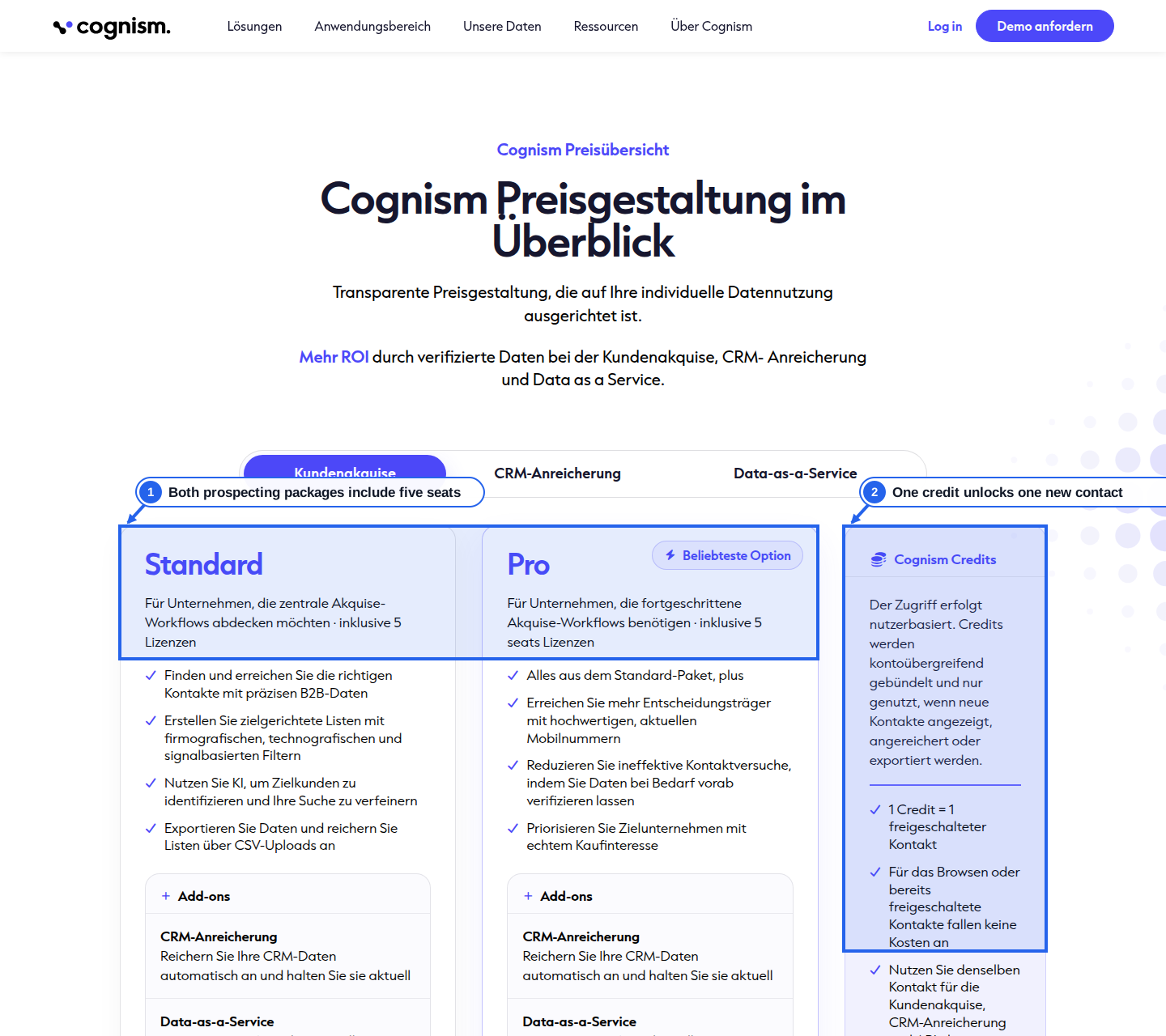
Cognism pricing page captured on June 2, 2026.
Checked June 2, 2026
Standard and Pro packages are described without public price numbers.
CRM enrichment and Data-as-a-Service are positioned as add-ons or separate buying motions.
Credits are account-based and used when contacts are shown, enriched, or exported.
What buyers should check

Cognism is a quote-led enterprise data provider. Buyers should verify license count, credit model, mobile access, enrichment, API, and regional coverage in the quote.

Cognism pricingCleanlist Cognism vs ApolloLandbase Cognism pricing guide
What to compare before switching
1

Published price versus quote-led terms

2

Credits and phone/email reveal costs

3

Export, CRM, API, and MCP access

4

Coverage quality in your target segment

5

Cancellation, renewal, and overage language

Why teams look for Cognism alternatives

Cognism is often shortlisted for good reasons: EMEA positioning, verified mobile workflows, compliance-oriented messaging, CRM enrichment, intent data, and Data-as-a-Service. The reason to look for an alternative is not that Cognism is weak. It is that the buyer may not need the full premium buying motion.

If the team mainly needs verified contact search, email output, exports, and programmatic access, a narrower data layer may be easier to buy, easier to test, and easier to fit into an existing CRM, sender, enrichment chain, or AI SDR workflow.

Pricing questions to ask

Cognism explains Standard and Pro packages, CRM Enrichment, Data-as-a-Service, and credits, but buyers still need a tailored quote. Ask how many seats are included, how many credits each seat gets, what actions consume credits, whether API or bulk delivery is included, and how renewal increases or additional credits are handled.

Ask the same questions of every alternative. A cheaper tool can become expensive if phone access, enrichment, exports, API calls, AI workflows, or re-verification require add-ons. The useful metric is cost per usable exported contact.

When Argorant is the best Cognism alternative

Choose Argorant when you want the contact-data layer without buying a larger managed suite. The core use case is aggregate coverage preview, signed-in reveal contacts, verified email workflow, clean export, API access, and MCP-ready agent behavior.

This is especially relevant for founders, agencies, lean outbound teams, GTM engineers, and RevOps operators who already have the rest of the stack and want reliable contact data to move through it.

When Cognism may still be better

Cognism may be the better choice when verified mobile numbers, EMEA-heavy sales motions, on-demand mobile verification, intent data, CRM enrichment, and managed Data-as-a-Service are central to the buying case.

It can also make sense when the organization prefers a premium vendor relationship with account management, support, enrichment operations, and a more consultative buying process.

How to test alternatives fairly

Use one target-account sample across every provider: 25 companies, three buyer titles, two countries, and one export destination. Compare relevant contacts, verified emails, phone availability, stale titles, duplicates, export fields, API/MCP access, and manual cleanup.

Then separate must-have workflows from nice-to-have modules. If verified mobile and enrichment operations are essential, Cognism deserves weight. If verified contacts and exports are the job, a focused data layer can win on simplicity and speed.

Evaluation checklist
Use the same target-company sample for every provider.
Compare verified emails, phone fields, titles, departments, and countries separately.
Ask whether API, CRM, and AI-agent workflows are included in the plan.
Measure cost per usable exported contact, not just advertised database size.
Check renewal terms, cancellation terms, and seat limits before signing.
Run a small workflow end to end before moving your full team.
Frequently asked questions
What is the best Cognism alternative?

For a focused verified-contact data layer with masked previews, exports, API access, and MCP workflows, Argorant is the most direct alternative. Apollo is stronger if you also need sales engagement. ZoomInfo is stronger for broad enterprise GTM intelligence.

Why would a team switch from Cognism?

Common reasons include wanting clearer entry pricing, a narrower contact-data workflow, different credit economics, less enterprise buying friction, or more direct API/MCP access for in-house tools and AI agents.

Is Cognism quote-based?

Yes. Cognism publishes package structure and credit behavior, but pricing is tailored to the product, team setup, usage, data volume, and delivery method. Buyers should request a current quote.

Should Cognism be replaced or supplemented?

If Cognism powers verified mobile, EMEA coverage, CRM enrichment, and Data-as-a-Service, supplementing may be safer. If the team mostly needs contact search and verified exports, a focused alternative can replace more of the workflow.

Pages reviewed
Cognism pricing page

Official pricing entry point covering Standard, Pro, CRM Enrichment, Data-as-a-Service, credits, API/bulk delivery, and quote-led buying.

Cognism homepage

Official product positioning around premium B2B data, verified contact records, Data-as-a-Service, and API access.

Cleanlist Cognism vs Apollo pricing guide

Third-party 2026 comparison; useful for directional buyer diligence, not a substitute for a current Cognism quote.

Landbase Cognism pricing guide

Third-party 2026 pricing discussion; treat estimates and renewal notes as directional until verified in a contract.

Apollo pricing page

Official pricing entry point; buyers should verify current plan names, credits, add-ons, and contract terms directly with Apollo.

Apollo credits guide

Official explanation of credit usage for emails, phones, enrichment, API usage, AI research, domains, mailboxes, and dialer activity.

Apollo API overview

Official API overview describing people search, enrichment, company data, OAuth partner flows, and plan-based API access.

Apollo API pricing

Official API pricing note explaining that advanced API access depends on the Apollo plan and that search/enrichment endpoints consume credits.

Apollo MCP docs

Official Apollo MCP documentation describing Claude connector workflows, available tools, credit usage, and plan limits.

ZoomInfo pricing page

Official pricing entry point; buyers should verify current package and contract details directly with ZoomInfo.

ZoomInfo 2025 Annual Report

Company-filed description of ZoomInfo's platform, subscription model, and business context.

Cleanlist ZoomInfo pricing guide

Third-party 2026 pricing estimate; useful for directional buyer research, not a substitute for a direct quote.

Costbench ZoomInfo SalesOS pricing

Third-party 2026 estimate and purchase-data summary for ZoomInfo SalesOS.

Try a focused alternative first.

Search verified contacts, export a clean list, and see whether Argorant fits your workflow before committing to a larger platform.

Start free
Loved by revenue teams
We run cold outbound for a dozen clients. Argorant replaced two tools and the bounce complaints just stopped.
Founder of a bootstrapped outbound agency · Lisbon, Portugal