Cognism vs Argorant
Cognism is a premium B2B data platform with strong sales-prospecting, CRM enrichment, verified mobile, intent, and Data-as-a-Service positioning. Argorant is the focused verified-contact layer for teams that want masked previews, visible entry plans, clean exports, API access, and MCP-ready workflows without starting from a quote-led enterprise motion.
Choose Cognism when EMEA coverage, verified mobile numbers, intent data, CRM enrichment, and a managed B2B data vendor relationship are central to the buying case. Choose Argorant when the immediate job is narrower: find the right people, verify contacts, export clean lists, and let humans or agents work from a reliable data layer with clear account controls.
Argorant can be tested when the team needs a focused verified-contact workflow and wants to validate coverage before committing to a larger vendor.
Cognism is usually stronger when European coverage, compliance posture, verified mobile workflows, and managed sales-data support are major buying criteria.
Argorant is easier to evaluate when visible entry plans, free tools, and a narrower reveal and export workflow matter.
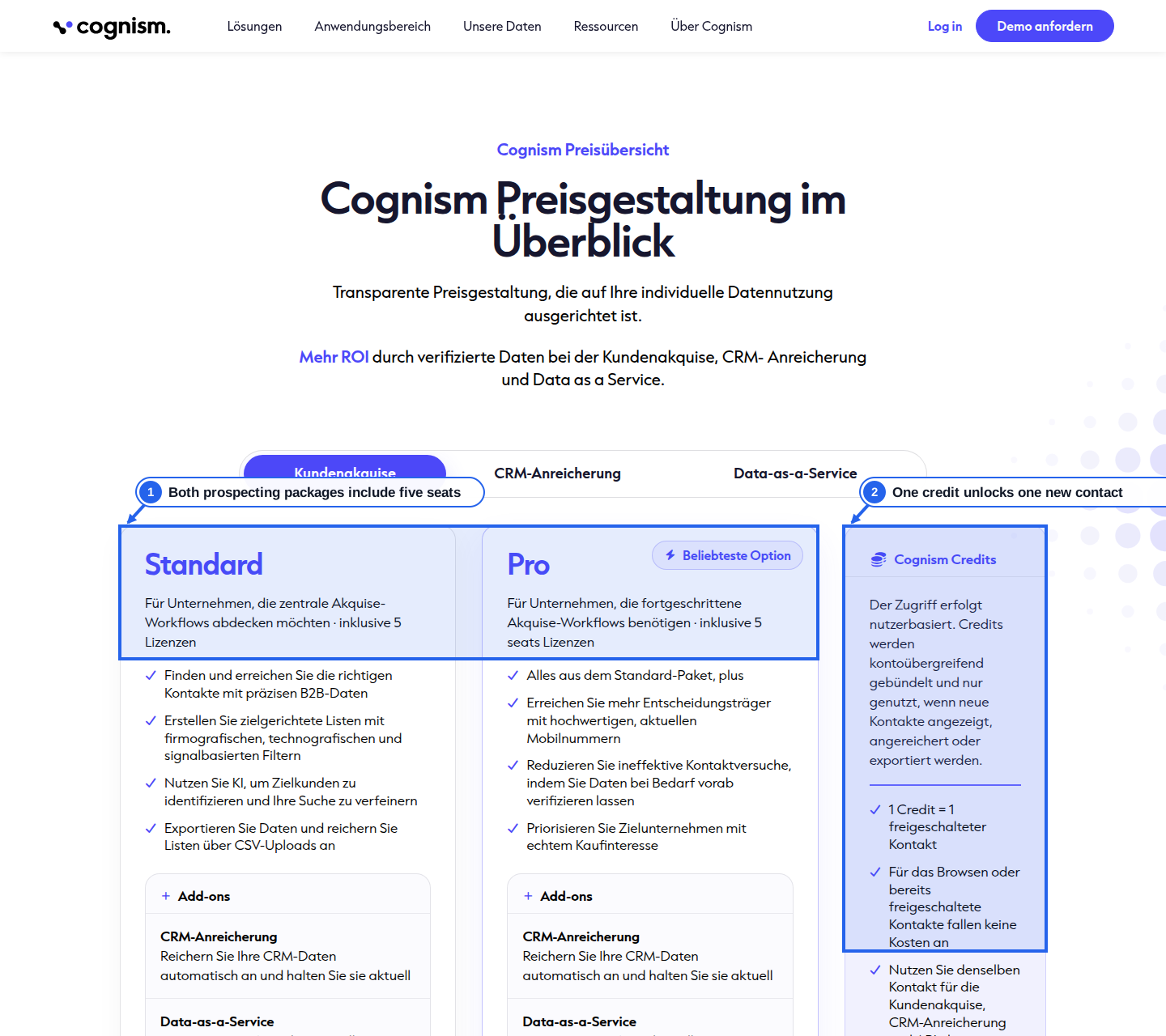
Cognism publishes package structure but sends buyers into a tailored quote. Its credits are used to reveal, enrich, or export contacts, so usage planning matters.
Argorant fits teams that want an API/MCP-oriented contact layer for in-house tools, GTM engineers, agencies, and AI SDR workflows.
Cognism offers Data-as-a-Service through API or bulk delivery, priced by data volume, delivery method, and required data fields.
Argorant is a better first test when verified email/contact export is the main workflow and phone depth is secondary.
Cognism is worth evaluating when verified mobile numbers and on-demand mobile verification are core to the outbound motion.
| Area | Argorant | Cognism | Buyer note |
|---|---|---|---|
| Product center | Verified B2B contact data, masked coverage previews, exports, API access, and MCP access | Premium B2B sales intelligence with prospecting, CRM enrichment, intent, verified mobiles, and Data-as-a-Service | Cognism is broader and more managed; Argorant is narrower and more data-layer oriented. |
| Pricing motion | Visible entry plans and free tools make baseline evaluation faster | Tailored quote based on product, team setup, usage, package, add-ons, data volume, and delivery method | Cognism buyers should verify seats, credits, add-ons, API/bulk delivery, renewal terms, and overage handling in writing. |
| Credit model | Evaluate by usable verified contacts, reveal and export limits, and workflow fit | Cognism states that credits are used to reveal, enrich, or export a contact, with each seat including an allocation | For both products, compare cost per usable exported contact rather than headline database claims. |
| Automation | MCP/OAuth access with counts and masked previews before reveal and export | Data-as-a-Service supports API or bulk delivery for embedded enrichment and in-house workflows | Argorant is better framed for agent access; Cognism is stronger when managed data delivery and enrichment are the job. |
| Best evaluation test | Run a target sample through company pages, email-format pages, free tools, and signed-in reveal and export once ready | Test Standard or Pro coverage, verified mobiles, intent, enrichment, and data delivery against the same account sample | Use the same companies, roles, countries, and export destination for a fair bake-off. |
Public entry plans, free tools, and account-controlled reveal and export mechanics for a focused verified-contact workflow.
Price Argorant against usable verified contacts, export quality, API/MCP access, and whether it avoids paying for unrelated suite features.
Tailored quote. Cognism lists Standard and Pro sales-prospecting packages, CRM Enrichment, and Data-as-a-Service rather than public dollar pricing.
Cognism says credits are used to reveal, enrich, or export contacts; Data-as-a-Service pricing depends on delivery method, volume, and fields required.
Plan pages and quote terms can change by billing cycle, seats, credits, and add-ons. Use this section to compare public details and the questions worth confirming before you commit.

Cognism is a quote-led enterprise data provider. Buyers should verify license count, credit model, mobile access, enrichment, API, and regional coverage in the quote.
Strong for enterprise teams that value EMEA coverage and managed buying. Argorant is stronger when transparent data access, high-volume exports, and agent-native workflows matter most.
Higher-volume plans can be scoped around seats, exports, API access, MCP usage, and admin controls instead of forcing a full sales-intelligence suite.
Best when the buyer wants transparent limits, high-volume contact search, export controls, and AI-agent access without a quote-only starting point.
A pricing page is only the first screen. Real cost shows up when seats, credits, exports, automation, and renewal language interact.
Minimum users, admin seats, and paid workspace members.
Email, phone, enrichment, API, and AI-agent usage rules.
CSV, CRM push, list download, and re-export limits.
API, MCP, browser extension, and workflow permissions.
Annual term, cancellation, uplift, and overage language.
Cognism versus Argorant is not a generic database-size comparison. Cognism is closer to a premium managed sales-intelligence vendor: prospecting, CRM enrichment, verified mobile data, intent signals, and Data-as-a-Service for teams that want a larger vendor relationship.
Argorant is the focused data-layer choice. The evaluation is simpler: can the team find the right accounts, understand coverage publicly without exposing real people, reveal verified contacts behind account controls, export clean lists, and eventually let an agent query the data safely?
Cognism's official pricing page does not publish a simple public dollar grid. It explains Standard and Pro sales-prospecting packages, CRM Enrichment, Data-as-a-Service, and credits. The practical buyer question is how many seats and credits are included, what actions consume credits, and whether API or bulk delivery is included or sold separately.
Evaluate Argorant by output rather than modules: relevant contacts found, verified emails, export fields, API/MCP fit, plan limit behavior, and cleanup time. If the workflow is mostly verified contact search and export, a focused product can be easier to justify than a broader premium suite.
Cognism is stronger when EMEA coverage, compliance posture, verified mobile numbers, on-demand mobile verification, and managed CRM enrichment are central to the buying case. Its Data-as-a-Service positioning also matters when a company wants data delivered into internal systems through API or bulk delivery.
Cognism may also fit better when the buyer wants vendor support around data operations: account management, enrichment, intent data, CRM maintenance, and a more consultative enterprise buying process.
Argorant is stronger when the team wants the contact data layer without a larger sales-intelligence purchase. Founders, agencies, lean SDR teams, GTM engineers, and AI SDR builders often need verified contacts and exports more than another broad workspace.
Argorant's public page strategy also supports faster pre-sales diligence. Company pages, email-format pages, org-chart coverage, and free tools can show aggregate value without putting real people, full email addresses, phones, or exports on public pages.
Pick 25 target accounts, three buyer titles, two countries, and one export destination. In Cognism, test contact coverage, verified mobile depth, intent data usefulness, enrichment fields, and credit consumption. In Argorant, test company coverage, role coverage, verified email output, export fields, and whether API/MCP access fits the workflow.
Then calculate cost per usable exported contact. Include seats, credits, add-ons, API or bulk delivery, phone access, re-verification, manual cleanup, and the value of any broader workflows that would actually replace another tool.
Agent workflows change the comparison because software can consume data faster than reps. A normal vendor evaluation asks whether a user can search and export. An AI-agent evaluation asks whether OAuth, plan limits, masking, preview limits, reveal permissions, and export controls are designed into the product.
That is a major Argorant opportunity. Cognism can be strong as a managed premium data source, but Argorant is strongest with teams that want a lightweight, account-scoped data layer built for humans and agents from the start.
Cognism is better when a team needs premium sales intelligence, EMEA-heavy coverage, verified mobile numbers, intent data, CRM enrichment, and managed data delivery. Argorant is better when the main job is verified contact search, clean export, API access, and MCP-ready workflows.
Cognism publishes package structure and explains credits, but pricing is tailored to the product, team setup, usage, data volume, and delivery method. Buyers should get a current quote before comparing total cost.
Cognism says credits are used to reveal, enrich, or export a contact, and each seat includes a credit allocation. Buyers should confirm included credits, overage costs, API use, enrichment use, and renewal terms in writing.
Argorant is the stronger fit when the goal is a focused OAuth-protected data layer with MCP, masked previews, plan limits, and account-controlled reveal and export. Cognism may be better when the AI workflow needs managed premium data delivery through a broader vendor relationship.
Official pricing entry point covering Standard, Pro, CRM Enrichment, Data-as-a-Service, credits, API/bulk delivery, and quote-led buying.
Official product positioning around premium B2B data, verified contact records, Data-as-a-Service, and API access.
Third-party 2026 comparison; useful for directional buyer diligence, not a substitute for a current Cognism quote.
Third-party 2026 pricing discussion; treat estimates and renewal notes as directional until verified in a contract.
Search verified contacts, check coverage, and export a clean list before deciding which platform belongs in your stack.
Start free