Clay vs Argorant: Enrichment Orchestration vs B2B Data Source
A category-correct comparison showing when to use Clay for table-based enrichment orchestration, Argorant for search and verified contact output, or both through HTTP.
By Argorant
Reviewed and updated August 20, 2026 by Argorant
Clay and Argorant are not interchangeable. Clay is an orchestration environment that can call many providers and apply row logic. Argorant is a B2B data and verification source with MCP, API, CLI, and selected direct destinations. Use Argorant alone for a simple ICP-to-list workflow, Clay alone when its available sources already solve the job, or Clay plus Argorant through Clay's generic HTTP API integration when table orchestration adds value.
What works today
Each label shows how a path works today: a direct Argorant connection, a documented setup, a generic HTTP call, a CSV file, or something to check in your own account first.
Argorant as source
RESTSearch, count, preview, reveal, verification, and export through API, MCP, CLI, or UI.
Clay orchestration
DocumentedTable logic, provider chaining, conditions, and HTTP integration using Clay Actions and Data Credits.
Clay plus Argorant
HTTPUse Clay's HTTP API step with an Argorant API key. Argorant is not listed in Clay's built-in catalog.
Step by step
- 1
Decide whether orchestration is necessary
List every required source, branch, fallback, and destination before choosing the stack.
Expected result: A single-source job stays simple; a multi-source job earns the orchestration overhead. - 2
Test one HTTP row
Store the Argorant key securely, map one request, and inspect success, no-result, and authentication errors.
Expected result: A known response schema before table-wide execution. - 3
Add conditions and limits
Run only on eligible rows, cap table scope, and branch on status before another provider or output.
Expected result: Controlled Clay Action, Data Credit, and Argorant credit use. - 4
Compare both bills
Compare the Clay Actions and Data Credits you used with the Argorant credits you used.
Expected result: True cost of orchestration plus source data.
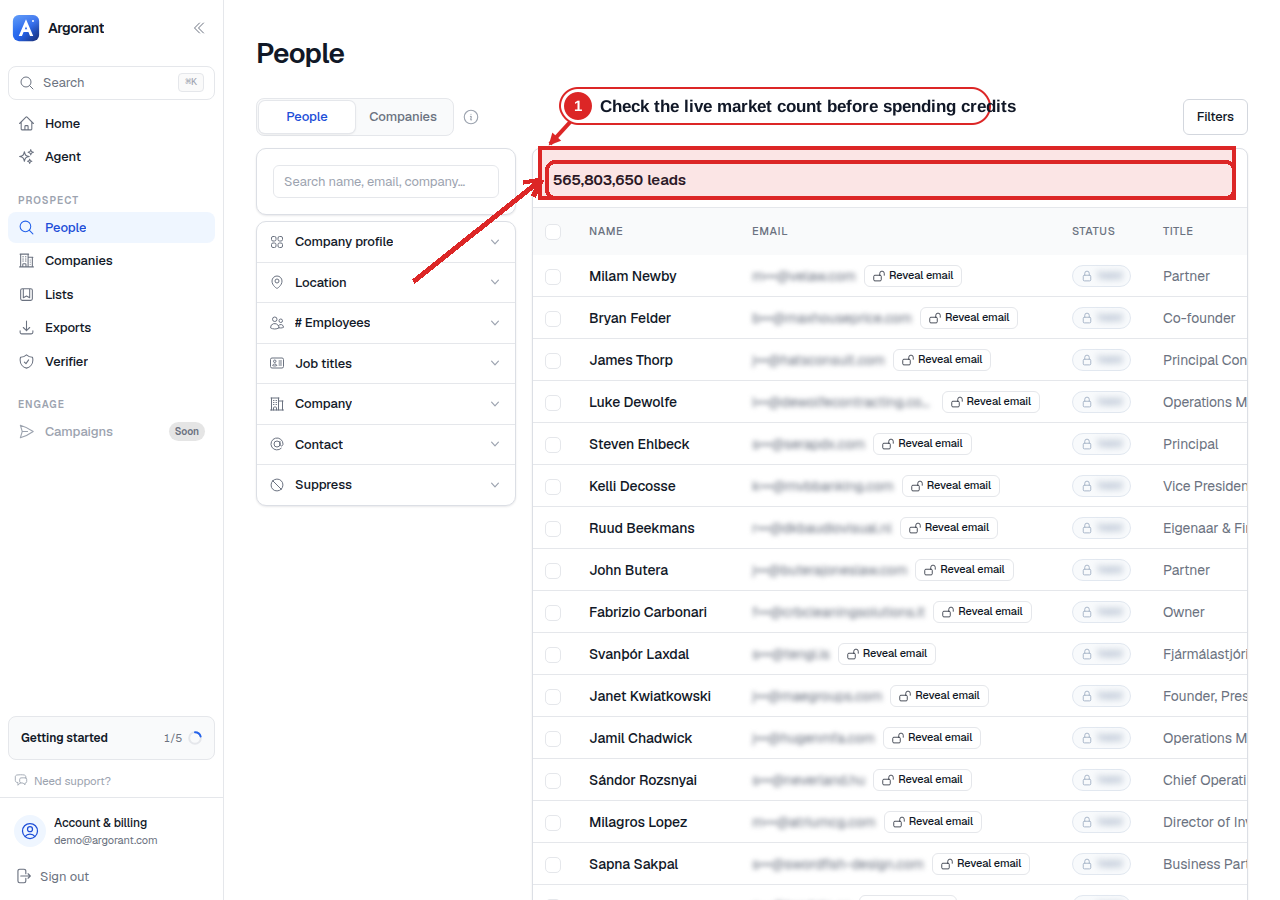
Inspect the market before a paid action
The result count comes first. It lets you or your agent check that the filters describe the right market before any contact is revealed or exported.
Plans, credits, and access gates
| Provider or layer | What to know | Published price |
|---|---|---|
| Clay | Actions and Data Credits are separate. Clay's public pricing lists HTTP API integrations on the Growth plan. | See the vendor's current pricing. |
| Argorant | Argorant usage is billed separately in plan or credit-pack credits. You only pay for contacts found. | See the vendor's current pricing. |
| Combined workflow | One enriched row can use both Clay and Argorant credits, so count both. | See the vendor's current pricing. |
Best fit by job
| Option | Best for | Access | Cost model | Verdict |
|---|---|---|---|---|
| Argorant only | Straight ICP-to-verified-list work | UI, MCP, REST, CLI | Contact output credits | Simplest when one source and selected direct pushes are enough. |
| Clay only | Existing multi-provider table workflows | Clay catalog and table actions | Clay Actions and Data Credits | Best when orchestration is the primary requirement. |
| Clay plus Argorant | Argorant data inside a multi-source table | Generic HTTP API integration | Both Clay and Argorant consumption | Useful combination through Clay's HTTP API step. |
Frequently asked questions
Is Argorant built into Clay?
No. You connect them with Clay's HTTP API step, which calls the Argorant API. Argorant is not listed in Clay's built-in catalog.
Why can the combined workflow cost more?
Clay charges its own Actions or Data Credits, and Argorant separately charges for contacts found. Both belong in the cost calculation.
Sources reviewed
Official product, developer, pricing, and policy pages reviewed on August 20, 2026. Prices and plans change, so check the vendor's current page before you buy.
Continue the workflow
Prove the workflow
before you scale it.
Count and preview first, then approve verified contacts with a clear spending limit.