Hunter vs Argorant
Hunter is a focused email-finding and email-verification platform with Domain Search, Email Finder, Email Verifier, API access, Chrome workflows, Google Sheets, sequences, and MCP. Argorant is the broader verified-contact data layer for teams that want company intelligence, email-format pages, org-chart coverage, exports, API access, and OAuth-protected MCP without exposing real contacts publicly.
Choose Hunter when the job is email-first: find a professional email by domain or name, verify it, and push that into a lightweight outreach workflow. Choose Argorant when the job is broader account research and verified B2B contact data: privacy-first company pages, email-format pages, org-chart coverage, signed-in reveal, clean exports, API access, and agent-ready controls.
Hunter is stronger when the buyer only needs domain search, name-based email finding, verification, and simple bulk or Sheets workflows.
Argorant is stronger when the buyer needs broader verified-contact coverage, company context, org-chart coverage, exports, API access, and aggregate account pages.
Hunter has a mature Email Verifier with status fields, confidence, SMTP/MX checks, disposable/webmail handling, accept-all awareness, and a clear 0.5-credit verifier cost.
Argorant can be tested by verified email output, export readiness, catch-all handling, and whether verification fits the actual outbound workflow.
Hunter's public product pages are strong around email tools, but the public page family is more email-tool led than company-intelligence led.
Argorant is strongest with company pages, email-format pages, org-chart pages, management pages, competitors pages, free tools, comparisons, and alternatives guides.
Hunter documents a remote MCP server at mcp.hunter.io plus SSE and Streamable HTTP transports for LLM clients that support MCP.
Argorant's MCP posture is stricter around public safety: masked search and fetch previews, OAuth-protected access, plan limits, and no public full email addresses or exports.
| Area | Hunter | Argorant | Buyer note |
|---|---|---|---|
| Product center | Email finder, domain search, email verifier, sources, confidence scores, bulk tasks, API, Google Sheets, extension, sequences, and MCP | Verified B2B contact data, company intelligence, email-format pages, org-chart coverage, exports, API access, free tools, and OAuth-protected MCP | Hunter is narrower and very clear. Argorant is broader and is strongest when the buyer needs account depth beyond email lookup. |
| Credits | Search credits and Verification credits; repeated searches or verifications are counted once per billing period; API and extension usage follow the same counting rules | Reveal, export, API, and MCP controls are best modeled by usable verified output, signed-in permissions, and account-level plan limits | Hunter is unusually transparent here. Argorant competes by being equally clear about usable verified contact economics. |
| Verification | Email Verifier with status, score, regex, gibberish, disposable, webmail, MX, SMTP, accept-all, block, and source fields | Verification tied to reveal contacts, exports, and workflow controls rather than a standalone email-only verifier | Hunter is stronger as a standalone email-verification tool. Argorant is stronger for verified contact workflows at account scale. |
| Extension | Chrome workflow for website/domain lookup, source display, confidence score, save-to-leads, type filters, department filters, and find-by-name | Extension is planned as a growth wedge; current public motion is pages, tools, app, API, and MCP | Hunter has a mature email-focused extension. Argorant can make the extension feed the broader account graph. |
| Public safety | Shows emails from Hunter's indexed database and public sources inside authenticated/product workflows | Public pages use aggregate coverage, sample contact examples, masked previews, and no public full email addresses, phones, profile URLs, or exports | Argorant's public research surface stays useful without making real contact data public. |
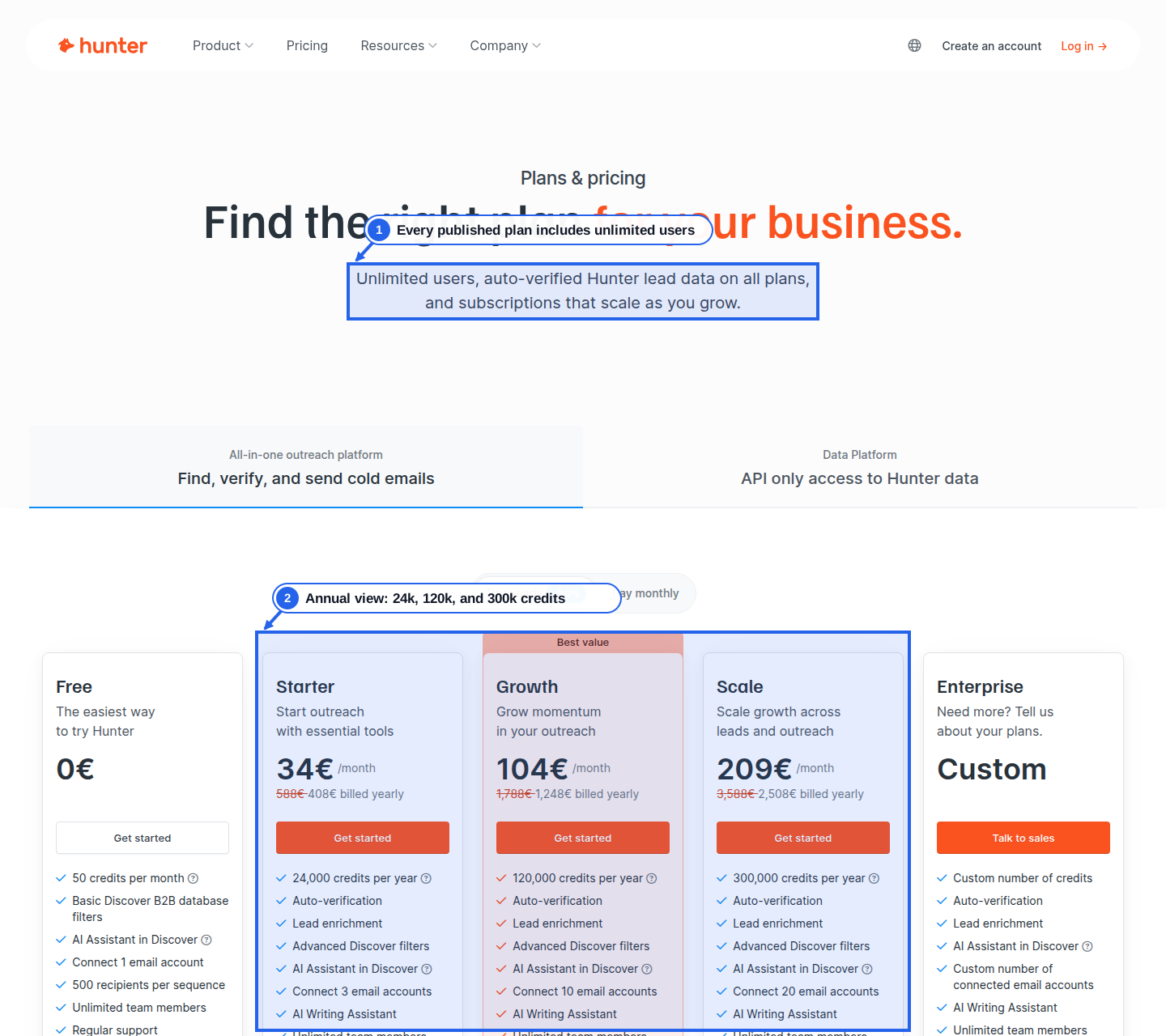
Credit-based plans with separate Search credits and Verification credits across Free, Starter, Growth, Scale, and Enterprise. Official pricing says 1 credit equals one email found by Domain Search, Email Finder, or Bulk Email Finder; Bulk Domain Search can count 1 credit for up to 10 emails; verification is 0.5 credit per verified email.
Hunter also says repeated searches or verifications are counted once per billing period, team members share the same plan credits, and credits are counted the same way across the web app, API, extension, Sheets add-on, and other products.
Focused verified-contact data layer with privacy-first pages, free tools, signed-in reveal contacts, export lists controls, API access, and OAuth-protected MCP behavior.
Evaluate Argorant by verified contact depth, company coverage, email-format coverage, org-chart coverage, export fields, API/MCP behavior, plan limits, and how safely humans or agents move from preview to reveal.
Plan pages and quote terms can change by billing cycle, seats, credits, and add-ons. Use this section to compare public details and the questions worth confirming before you commit.

Hunter is transparent for email-led workflows and moves to custom pricing when the buyer needs larger scale or enterprise terms.
Best when email discovery and verification are the main job. Argorant is stronger when company intelligence, contact depth, exports, and agent usage matter more.
Higher-volume plans can be scoped around seats, exports, API access, MCP usage, and admin controls instead of forcing a full sales-intelligence suite.
Best when the buyer wants transparent limits, high-volume contact search, export controls, and AI-agent access without a quote-only starting point.
A pricing page is only the first screen. Real cost shows up when seats, credits, exports, automation, and renewal language interact.
Minimum users, admin seats, and paid workspace members.
Email, phone, enrichment, API, and AI-agent usage rules.
CSV, CRM push, list download, and re-export limits.
API, MCP, browser extension, and workflow permissions.
Annual term, cancellation, uplift, and overage language.
Hunter versus Argorant is not a question of which product is more complicated. Hunter is intentionally email-tool focused. It helps teams find professional emails by domain or name, verify deliverability, run bulk tasks, use the API, work in Sheets, and use a Chrome extension on websites.
Argorant's job is broader. It helps a buyer understand a company, email patterns, role coverage, management coverage, org-chart signals, competitors, and verified contact depth before moving real people, full email addresses, phones, profile URLs, or exports after sign-in.
Hunter's official pricing is clear about the basics: Search credits are used for Domain Search and Email Finder; Verification credits are used for Email Verifier; one Email Finder result costs one Search credit; one verified email costs 0.5 Verification credit; and repeated searches or verifications are counted once per billing period.
That is a strong model for email-first workflows. The comparison question is whether the team needs only verified emails or whether it needs broader contact and account intelligence. If the workflow includes company pages, org charts, role coverage, exports, API access, and AI agents, compare Hunter's email economics with Argorant's cost per usable verified contact.
Hunter is stronger when the team wants a focused email finder and verifier. Its API help describes Domain Search, Email Finder, Email Verifier, Email Count, enrichment, account information, leads, lead lists, and sequence resources. Its API reference documents detailed verifier output such as valid, invalid, accept-all, disposable, webmail, MX, SMTP, and source behavior.
Hunter is also stronger today for email-focused browser workflow. The extension can return indexed emails connected to a domain, show sources, support filters, save leads, and find by name. It is a mature wedge for teams that prospect from websites.
Argorant is stronger when the team wants the account graph, not only the email address. Public company pages, email-format pages, org-chart pages, management pages, competitors pages, comparison pages, alternatives pages, and free tools can give searchers useful context without publishing real contact data.
Argorant is also the cleaner fit for AI-agent governance if the MCP surface remains strict: search and fetch can return masked previews, while reveal contacts, export lists, high-volume usage, and owner and admin controls stay behind account controls.
Use one controlled sample: 25 target companies, three buyer roles, two countries, and one export destination. In Hunter, test Domain Search, Email Finder, Email Verifier, Chrome extension lookup, bulk tasks, API access, MCP behavior, and credit burn. In Argorant, test company pages, email-format pages, org-chart coverage, verified email output, export fields, API/MCP previews, and signed-in reveal controls.
Then count usable output. Relevant people found, verified emails, stale titles, duplicates, domain confidence, role coverage, export completeness, API behavior, and total credit or plan cost matter more than a generic feature list.
Hunter's product pages show how valuable free tools and focused utility pages can be. Searchers looking for an email finder, domain search, verifier, API, extension, or bulk finder can land on a page that answers the exact job.
Argorant keeps that utility discipline while adding deeper company-intelligence pages. The public page can help the buyer decide what is possible. It does not expose named contacts, full email addresses, direct phones, profile URLs, or exportable records.
Hunter is better when the job is email-first: domain search, name-based email finding, email verification, API access, extension lookup, and simple bulk workflows. Argorant is better when the team wants broader verified-contact coverage, company intelligence, org-chart pages, exports, API access, and OAuth-protected MCP controls.
Yes. Hunter's API documentation describes a remote MCP server at mcp.hunter.io with SSE and Streamable HTTP transports for LLM clients that support MCP. Buyers should verify API-key and credit behavior for their plan.
Hunter's pricing page says Search credits are used for Domain Search and Email Finder, Verification credits are used for Email Verifier, one Email Finder result costs one Search credit, and one verified email costs 0.5 Verification credit. Repeated searches or verifications are counted once per billing period.
Hunter is strong for email-tool pages such as Email Finder, Domain Search, Email Verifier, API, and extension pages. Argorant competes with broader privacy-first company pages, email-format pages, org-chart pages, management pages, competitors pages, comparisons, alternatives, and free tools.
Official pricing page covering Search credits, Verification credits, Free, Starter, Growth, Scale, Enterprise, API, MCP, extension, team sharing, cancellation, and credit counting rules.
Official help article explaining API key authentication, Discover, Domain Search, Email Finder, Email Verifier, enrichment, account information, rate limits, bulk limitations, and credit costs.
Official API reference for Domain Search, Email Finder, Email Verifier, Email Count, enrichment, leads, custom attributes, sequences, test API key, verification fields, and MCP endpoints.
Official Email Finder product page covering email finding by name and domain, verification status, confidence score, sources, bulk lookup, API, Google Sheets add-on, and free-plan usage.
Official extension page describing website-based email discovery, confidence scoring, free-account credits, sources, discovery dates, and the claim that the extension does not scrape page content.
Official help article explaining website lookup, database-indexed email results, save-to-leads, type and department filters, find-by-name, and optional data points like job title, telephone, and social profiles.
Search verified contacts, check coverage, and export a clean list before deciding which platform belongs in your stack.
Start free