Comparison

UpLead vs Argorant

UpLead is a B2B data platform built around verified emails, verified phone numbers, mobile direct dials, Chrome prospecting, API access, company enrichment, and credit-based contact unlocks. Argorant is the focused alternative for teams that want broader verified-contact coverage, company intelligence, email-format pages, org-chart pages, exports, API access, and OAuth-protected MCP controls.

Bottom line

Choose UpLead when you want a packaged contact-data product with verified email and phone fields, LinkedIn/company-site extension workflows, enrichment APIs, and a clear one-credit-per-contact model. Choose Argorant when the job is an aggregate account intelligence layer plus signed-in reveal, clean exports, API access, and agent-ready MCP governance.

Verified phone and email lookup
UpLead

UpLead is stronger when the buyer wants one credit to unlock a contact with email and mobile direct-dial data where available.

Argorant

Argorant is stronger when the buyer wants broader contact coverage, company context, email-format pages, org-chart pages, exports, and account controls around reveal.

Extension workflow
UpLead

UpLead has a mature extension story for LinkedIn, prospecting, company websites, related contacts, email patterns, filters, and technology signals.

Argorant

Argorant's current public motion is pages, tools, app, API, and MCP; browser workflows belong in the same account graph rather than a separate lookup silo.

API and enrichment
UpLead

UpLead documents company enrichment, person enrichment, combined API, company-name-to-domain, Prospector API, billing behavior, credits, and verification statuses.

Argorant

Evaluate Argorant by API/MCP previews, export controls, plan limits, and how safely humans or agents can move from aggregate coverage to verified contacts.

Public pages
UpLead

UpLead's public product pages explain workflows, pricing, API, and extension capabilities, but they are not primarily a public company-page family.

Argorant

Argorant is strongest in this motion with company pages, email-format pages, management pages, competitors pages, org-chart pages, free tools, comparisons, and alternatives guides.

Scorecard
AreaUpLeadArgorantBuyer note
Product centerVerified B2B contacts, verified emails, phone numbers, mobile direct dials, Chrome extension, data enrichment, API, intent, technographics, and CRM-oriented workflowsVerified B2B contact data, company intelligence, email-format pages, org-chart pages, exports, API access, free tools, and OAuth-protected MCPUpLead is strong as a packaged contact-data product. Argorant is stronger when the buyer wants the data layer plus privacy-first acquisition pages and agent controls.
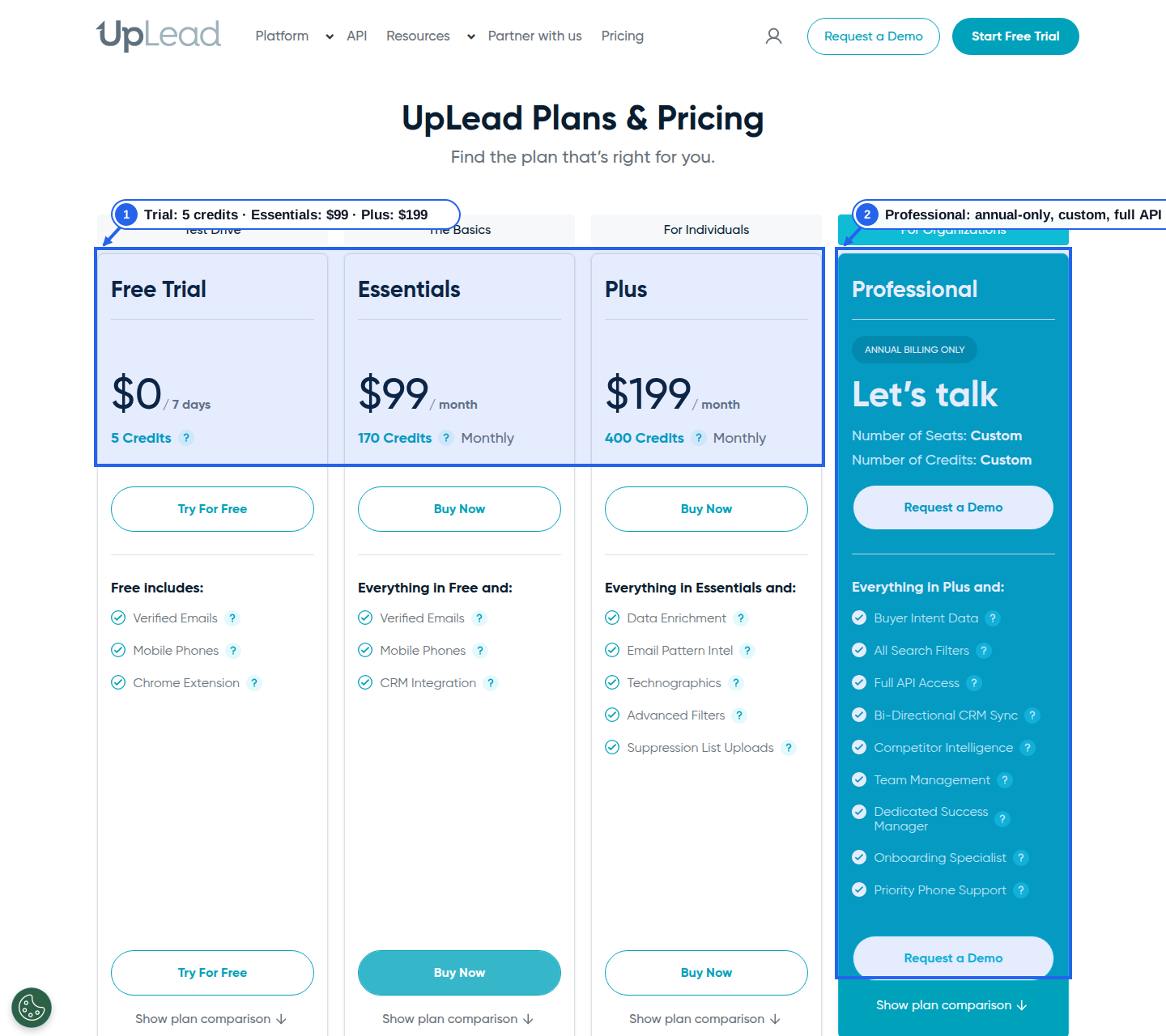
CreditsA credit unlocks a contact for download or CRM export and gives access to email and mobile direct dial; official pricing lists 5 trial credits, 170 Essentials credits/month, 400 Plus credits/month, and custom Professional creditsReveal/export/API/MCP economics is best modeled by usable verified output, account permissions, plan limits, and export capsUpLead's credit model is straightforward. Argorant competes by making reveal and export/API/MCP economics equally predictable.
VerificationEmail verification statuses include valid, invalid, unknown, and accept-all; credits are deducted for contact emails when the response is valid or accept-allVerification is best tied to signed-in reveal contacts, export lists readiness, catch-all handling, and workflow controlsThe test is not only whether an email exists. It is whether the record is current, reachable, exportable, and useful in the buyer's workflow.
APIAPI docs and product page cover enrichment and prospecting endpoints for CRM sync, workflow automation, enrichment, and custom applicationsAPI plus OAuth-protected MCP access with masked previews, plan limits, and private reveal and export controlsUpLead is credible for API enrichment. Argorant is strongest where AI-agent safety and public-to-private reveal governance matter.
Public safetyExtension and app workflows can expose contact details to signed-in users according to plan and creditsPublic pages use aggregate coverage, sample contact examples, masked previews, and no public full email addresses, phones, profile URLs, or exportsArgorant's public surface remains useful to buyers without publishing sensitive contact data.
UpLead pricing

Official pricing lists Free with 5 credits for 7 days, Essentials at $99/month with 170 credits/month, Plus at $199/month with 400 credits/month, and Professional as a custom annual/team plan. A credit unlocks one contact for download or CRM export and includes email and mobile direct dial where available.

Additional credits are listed at $0.60/credit for Essentials and $0.50/credit for Plus, with custom pricing for Professional. Free, Essentials, and Plus are single-user accounts; Professional is a team account with seat management.

Argorant pricing

Focused verified-contact data layer with privacy-first pages, free tools, signed-in reveal contacts, export lists controls, API access, and OAuth-protected MCP behavior.

Evaluate Argorant by verified contact depth, company coverage, email-format coverage, org-chart coverage, export fields, API/MCP behavior, plan limits, and how safely users or agents move from preview to reveal.

Plan and pricing snapshot

Plan pages and quote terms can change by billing cycle, seats, credits, and add-ons. Use this section to compare public details and the questions worth confirming before you commit.

UpLead pricing page captured on June 2, 2026.
UpLead
Checked June 2, 2026
Plan details reviewed
Free trial: $0 for 7 days with 5 credits.
Essentials: $99/month with 170 monthly credits.
Plus: $199/month with 400 monthly credits.
Professional: custom seats and credits, annual billing only.
What buyers should check

UpLead gives public self-serve entry prices, then moves organizations to a custom annual plan for larger seats, credits, API, and support needs.

Buyers should compare credits, additional-credit pricing, verified phones, API access, and export workflows against Argorant's higher-volume contact use cases.

UpLead pricingUpLead API docsUpLead Chrome extension
Plan page reviewed
Argorant
Argorant
Checked June 2, 2026
Plan details reviewed
Free plan for testing coverage.
Starter starts at $99/month.
Pro starts at $249/month.
Scale starts at $579/month on monthly billing or $434/month when billed annually.
What buyers should check

Higher-volume plans can be scoped around seats, exports, API access, MCP usage, and admin controls instead of forcing a full sales-intelligence suite.

Best when the buyer wants transparent limits, high-volume contact search, export controls, and AI-agent access without a quote-only starting point.

Argorant pricing
Cost controls to model

A pricing page is only the first screen. Real cost shows up when seats, credits, exports, automation, and renewal language interact.

1
Seats

Minimum users, admin seats, and paid workspace members.

2
Credits

Email, phone, enrichment, API, and AI-agent usage rules.

3
Exports

CSV, CRM push, list download, and re-export limits.

4
Automation

API, MCP, browser extension, and workflow permissions.

5
Renewal

Annual term, cancellation, uplift, and overage language.

The real buying decision

UpLead versus Argorant is mostly a question of packaged contact-data workflow versus privacy-first data layer. UpLead is built around contact unlocks, verified emails, phone data, enrichment, intent and technology signals, CRM export, API access, and a Chrome extension that works around LinkedIn and company websites.

Argorant does not need to pretend those workflows do not matter. The stronger position is different: account research, company pages, email-format pages, org-chart pages, management pages, competitors pages, comparison pages, alternatives pages, free tools, clean exports, API access, and OAuth-protected MCP controls.

Pricing and credits

UpLead's official pricing is concrete: one credit unlocks one contact for download or CRM export, including email and mobile direct dial where available. The public page lists 5 trial credits, 170 monthly Essentials credits, 400 monthly Plus credits, and custom Professional credits, with additional-credit pricing on Essentials and Plus.

That makes UpLead easier to model than quote-only vendors. The buyer still needs to test the actual sample: whether the target roles have verified emails, phone fields, current titles, exportable fields, and enough coverage in the right countries. Compare that with Argorant by cost per usable verified contact and by how reveal and export/API/MCP controls fit the team.

Where UpLead is stronger

UpLead is stronger today for verified email plus phone workflows. Its pricing page emphasizes verified emails, verified phone numbers, mobile direct dials, and one-credit contact unlocks. Its API docs also describe email verification statuses and billing behavior around valid and accept-all responses.

UpLead also has a stronger extension story today. The official extension page describes LinkedIn prospecting, email and phone lookup, related contacts, company information, email patterns, filtering contacts inside a company, and technology signals while browsing.

Where Argorant is stronger

Argorant is stronger when the buyer wants the account graph and company research surface. Public pages can show company facts, email patterns, role coverage, management coverage, competitors, org-chart signals, and comparison context without exposing real contact identities, full email addresses, phone numbers, profile URLs, or exportable records.

Argorant is also stronger when AI-agent governance is central. Search and fetch can return masked previews, while reveal contacts, export lists, high-volume usage, and owner and admin controls stay behind account controls. That matters once agents can query contact data much faster than a human UI.

How to test both fairly

Use one controlled sample: 25 target companies, three buyer roles, two countries, and one export destination. In UpLead, test search, extension lookup, verified email availability, phone availability, title freshness, API enrichment, export behavior, and credit consumption. In Argorant, test company pages, email-format pages, org-chart coverage, verified email output, export fields, API/MCP previews, and signed-in reveal controls.

Then count usable output. Relevant contacts found, verified emails, mobile fields, stale titles, duplicates, export completeness, API behavior, extension speed, and total credit or plan cost matter more than headline database claims.

The Chrome extension lesson

UpLead validates the extension wedge. If a rep can unlock a contact from LinkedIn or a company website and immediately see related contacts, email pattern, and company context, the workflow feels closer to the page where prospecting happens.

Argorant treats the extension as a future distribution channel, not as a separate product. The extension should connect back to the broader account graph: company page, email format, org chart, competitors, verified reveal contacts, export lists, API usage, MCP usage, and account-level plan limits.

Evaluation checklist
Ask for seats, credits, exports, phone access, API access, and renewal terms in writing.
Run both products on the same target-account sample before judging coverage.
Check catch-all handling, invalid email handling, and whether re-checks cost extra.
Compare cost per usable exported contact, not only headline database size.
Confirm CRM, CSV, API, and AI-agent workflows before committing.
Decide whether you need a focused data workflow or a broader enterprise GTM suite.
Frequently asked questions
Is UpLead better than Argorant?

UpLead is better when the team wants a packaged contact-data product with verified email and phone fields, Chrome prospecting, enrichment APIs, and a straightforward credit unlock model. Argorant is better when the job is broader verified-contact coverage, company intelligence, org-chart pages, exports, API access, and OAuth-protected MCP controls.

How do UpLead credits work?

UpLead's pricing page says one credit unlocks one contact for download or CRM export and gives access to email and mobile direct dial where available. API docs say one credit is deducted for each contact or company record received, with email contacts charged when the verification status is valid or accept-all.

Does UpLead have an API?

Yes. UpLead publishes API documentation and an API product page covering enrichment and prospecting workflows such as company enrichment, person enrichment, combined API, company-name-to-domain, and Prospector API.

Which is better for AI-agent workflows?

UpLead is credible for API-based enrichment. Argorant is the better fit when the workflow needs masked previews, OAuth-protected MCP, plan limits, export caps, and strict reveal controls before an AI agent can access sensitive contact data.

Pages reviewed
UpLead pricing page

Official pricing page covering Free, Essentials, Plus, Professional, credit counts, single-user/team packaging, additional-credit pricing, verified emails, verified phone numbers, Chrome extension, API, and support tiers.

UpLead API documentation

Official API documentation covering email verification statuses, billing behavior, credits, remaining-credit endpoint, list management, and API endpoint structure.

UpLead API product page

Official API product page describing company enrichment, person enrichment, combined API, company-name-to-domain, and Prospector API for CRM sync, workflow automation, enrichment, and custom applications.

UpLead Chrome extension

Official extension page describing LinkedIn prospecting, verified email and phone lookup, related contacts, company information, email pattern, filters, and technology signals while browsing.

UpLead Chrome Web Store listing

Chrome Web Store listing describing targeted prospect lists, competitor intelligence, email pattern intel, social links, intent data, and UpLead support channels.

Try Argorant before you enter a sales cycle.

Search verified contacts, check coverage, and export a clean list before deciding which platform belongs in your stack.

Start free
Loved by revenue teams
We run cold outbound for a dozen clients. Argorant replaced two tools and the bounce complaints just stopped.
Founder of a bootstrapped outbound agency · Lisbon, Portugal