Best UpLead alternatives for B2B contact data.
UpLead is a serious B2B contact-data product with verified emails, verified phone numbers, mobile direct dials, Chrome prospecting, API enrichment, and a clear credit model. Teams compare UpLead alternatives when they need broader company intelligence, privacy-first company pages, different export governance, or a data layer designed for AI-agent workflows.
The right UpLead alternative depends on what you are replacing: contact unlocks, phone data, email verification, Chrome prospecting, company enrichment, API access, technographics, intent, CRM export, or broader account intelligence. Start with the job, then test every provider on the same target accounts.
Best fit when the team wants a broader contact-data layer and public account research before reveal. Public pages use aggregate coverage, sample contact examples, and masked previews while real people, emails, phones, profile URLs, and exports are available after sign-in.
Worth testing when the team wants a mature browser prospecting workflow and a credit-based B2B contact product.
Relevant when the buyer wants lookup-heavy contact discovery and a broad public profile/company-page footprint.
A broader alternative when the team wants prospecting and outbound execution in the same workspace.
A close alternative when the team wants self-serve credits, email/mobile enrichment, API access, and public company/email-format pages.
Better when the job is email-first and verification-focused rather than broader B2B contact and account intelligence.
Public pricing is only the starting point. Compare plan details, credit rules, and the questions worth confirming before you switch.

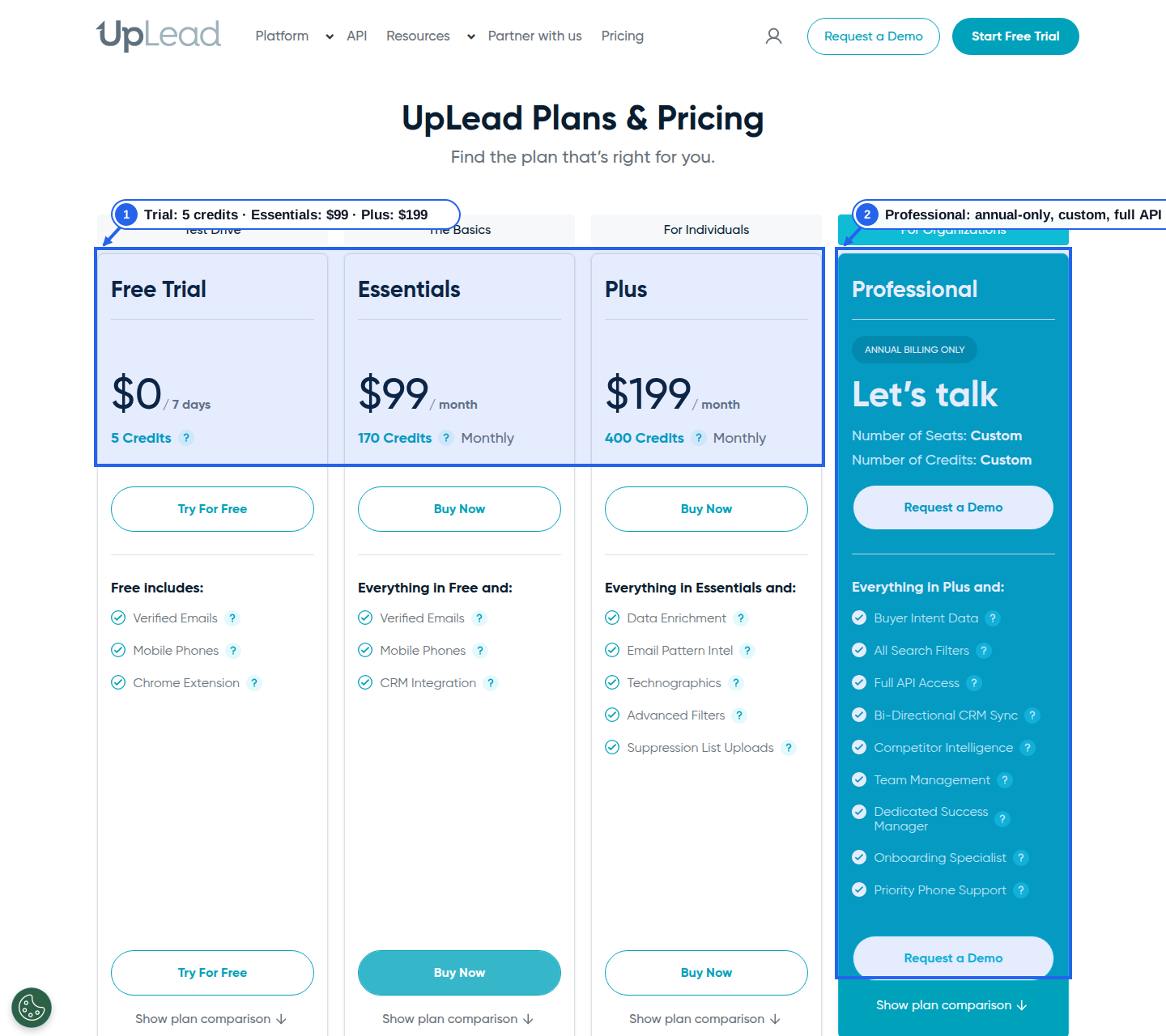
UpLead gives public self-serve entry prices, then moves organizations to a custom annual plan for larger seats, credits, API, and support needs.
Published price versus quote-led terms
Credits and phone/email reveal costs
Export, CRM, API, and MCP access
Coverage quality in your target segment
Cancellation, renewal, and overage language
UpLead is not a weak product. It has verified email and phone data, mobile direct dials, API access, enrichment, intent and technology signals, CRM export, and a Chrome extension. Teams usually look for alternatives because they need a different workflow, different credit economics, broader public account intelligence, or stricter AI-agent governance.
That means the alternative search should start with the job. If the main job is one-credit contact unlocks with email and phone data, UpLead may remain a strong fit. If the job is account research, org-chart coverage, exports, API access, and MCP controls, Argorant becomes more relevant.

Use one controlled account sample across every provider: 25 companies, three buyer titles, two countries, and one export destination. Measure relevant contacts found, verified emails, phone fields, title freshness, duplicate records, export fields, API behavior, extension speed, MCP behavior, and credit burn.
Then compare cost per usable exported contact. Include contact unlock credits, extra-credit pricing, failed or low-confidence records, phone fields, enrichment, exports, CRM handoff, API access, and cleanup time.
Choose Argorant when the team wants company research before signing in. Company pages, email-format pages, org-chart pages, management pages, competitors pages, comparison pages, alternatives pages, and free tools can show useful account context without publishing real contact details.
Argorant is also a better fit when AI-agent governance matters. Search and fetch can return masked previews, while reveal contacts, export lists, high-volume usage, and owner and admin controls stay behind account controls.
UpLead may still be better when the team wants verified emails and phone numbers in a packaged contact-data product, plus extension lookup and API enrichment. Its pricing page makes the credit model easy to understand compared with many quote-led tools.
UpLead may also fit when mobile direct dials, intent data, technographics, and CRM export are central to the workflow. The diligence is whether the exact target accounts and roles have enough verified, export-ready records.
UpLead's public material is strong around product workflows: pricing, API, extension, intent, technologies, enrichment, and Chrome prospecting. That is useful for buyers comparing feature fit.
Argorant uses a broader public page family. Company pages, email-format pages, org-chart pages, competitors pages, management pages, comparison pages, alternatives pages, and free tools can answer many more account-research questions while keeping named contacts private.
Argorant is the best UpLead alternative when the team wants broader verified-contact coverage, company intelligence, org-chart pages, exports, API access, and OAuth-protected MCP controls. Lusha, RocketReach, Apollo, Prospeo, and Hunter fit different workflows.
Common reasons include needing broader account intelligence, privacy-first company pages, different export governance, stricter AI-agent controls, or a workflow that is less centered on one-credit contact unlocks.
Yes. UpLead's official pricing says one credit unlocks one contact for download or CRM export and gives access to email and mobile direct dial where available. Essentials and Plus list monthly credit allowances and additional-credit pricing.
If UpLead already works for phone and email lookup, supplementing with a broader company-intelligence layer may be safer. Replace it only after testing the same target-account sample in UpLead and the alternative.
Official pricing page covering Free, Essentials, Plus, Professional, credit counts, single-user/team packaging, additional-credit pricing, verified emails, verified phone numbers, Chrome extension, API, and support tiers.
Official API documentation covering email verification statuses, billing behavior, credits, remaining-credit endpoint, list management, and API endpoint structure.
Official API product page describing company enrichment, person enrichment, combined API, company-name-to-domain, and Prospector API for CRM sync, workflow automation, enrichment, and custom applications.
Official extension page describing LinkedIn prospecting, verified email and phone lookup, related contacts, company information, email pattern, filters, and technology signals while browsing.
Chrome Web Store listing describing targeted prospect lists, competitor intelligence, email pattern intel, social links, intent data, and UpLead support channels.
Official pricing page and FAQ covering free-plan credits, public credit examples, cancellation, rollover, and Scale customization.
Official help article explaining credit categories, API credit consumption, data-point costs, API result costs, bulk-request rules, and rollover behavior.
Official API help article covering API keys, Premium and Scale availability, MCP entry points, credit costs, request minimums, bulk limits, and API key credit caps.
Official MCP guide for Claude, ChatGPT, Cursor, VS Code, and other clients, including OAuth remote MCP, npx setup, tool categories, API-key requirements, and security notes.
Official extension page describing LinkedIn, Sales Navigator, CRM, company-site, save-to-list, CRM handoff, and bulk export workflows.
Official help article explaining where the Chrome and Edge extension works, what it can reveal, and how extension features vary by plan.
Official pricing entry point. Buyers should verify the current checkout screen, annual/monthly toggle, team plan terms, exports, API access, and regional differences directly with RocketReach.
Chrome Web Store listing for RocketReach's prospecting extension, including publisher, ratings, user count, and extension positioning.
Third-party 2026 pricing review that cites RocketReach's pricing page and documentation; useful for plan mechanics and annual pricing context, not a substitute for a current quote.
Third-party 2026 guide covering plan tiers, lookup limits, per-seat economics, and annual billing assumptions. Treat figures as directional until verified at checkout.
Third-party 2026 competitor analysis discussing individual plans, team plans, mobile access, API/Salesforce gating, and lookup add-on costs.
Official pricing entry point; buyers should verify current plan names, credits, add-ons, and contract terms directly with Apollo.
Official explanation of credit usage for emails, phones, enrichment, API usage, AI research, domains, mailboxes, and dialer activity.
Official API overview describing people search, enrichment, company data, OAuth partner flows, and plan-based API access.
Official API pricing note explaining that advanced API access depends on the Apollo plan and that search/enrichment endpoints consume credits.
Official Apollo MCP documentation describing Claude connector workflows, available tools, credit usage, and plan limits.
Pricing page covering Free, Starter, Growth, and Pro plans, included credits, filters, integrations, API access, team billing, credit expiry, and add-ons.
Official credit rules for verified email reveal, mobile reveal, company enrichment, search pages, no-result behavior, re-enrichment, rollover, and shared team credits.
Official API documentation describing person enrichment, company enrichment, bulk endpoints, people search, company search, account usage, authentication, and rate limits.
Official help article showing different Search and Enrich endpoint limits by plan, plus how successful requests and rate-limited requests are counted.
MCP documentation covering hosted and local setup, enrich and search tools, credit usage, masked previews, and support for MCP-compatible clients.
Official authentication documentation for local API-key mode, hosted OAuth mode, manual OAuth credentials, and direct API-key header access.
Chrome Web Store listing for Prospeo's extension, including rating, user count, publisher, and extension positioning around finding emails and mobile numbers.
Public Prospeo company/email-format page example showing email patterns, company overview, employees, departments, funding, and a conversion path to verified emails.
Public Prospeo company page example showing company facts, email formats, employee distribution, funding, tech stack, trending companies, and FAQ content.
Official pricing page covering Search credits, Verification credits, Free, Starter, Growth, Scale, Enterprise, API, MCP, extension, team sharing, cancellation, and credit counting rules.
Official help article explaining API key authentication, Discover, Domain Search, Email Finder, Email Verifier, enrichment, account information, rate limits, bulk limitations, and credit costs.
Official API reference for Domain Search, Email Finder, Email Verifier, Email Count, enrichment, leads, custom attributes, sequences, test API key, verification fields, and MCP endpoints.
Official Email Finder product page covering email finding by name and domain, verification status, confidence score, sources, bulk lookup, API, Google Sheets add-on, and free-plan usage.
Official extension page describing website-based email discovery, confidence scoring, free-account credits, sources, discovery dates, and the claim that the extension does not scrape page content.
Official help article explaining website lookup, database-indexed email results, save-to-leads, type and department filters, find-by-name, and optional data points like job title, telephone, and social profiles.
Search verified contacts, export a clean list, and see whether Argorant fits your workflow before committing to a larger platform.
Start free