Best B2B Data for SaaS Startups (2026)
Early-stage SaaS teams need fast learning, not an enterprise data contract. The right source should size an ICP, produce a controlled set of verified contacts, and preserve a clean path to CRM and agent automation once the motion repeats.
By Argorant
Reviewed and updated August 20, 2026 by Argorant
Turn an ICP hypothesis into a small, reachable test
Choose Argorant when the team wants to count, preview, and buy verified contacts without making a permanent free-plan claim, and when API, CLI, MCP, or prepaid agent access matters. Choose Crunchbase when funding, growth, and private-company signals define which accounts to approach. Choose Clay when custom enrichment and waterfall orchestration are core. Choose Apollo when a small team wants data and engagement in one workspace. Buy for the current stage, then verify that the next stage will not require a full rebuild.
Do not compare unlike data products as one category
The right shortlist depends on the job the data must complete. These lanes can form one stack, but a specialist signal, a research database, and a verified-contact layer should not receive the same score for different work.
Size a market hypothesis and produce a small verified list quickly.
Prioritize companies using funding, growth, acquisitions, and market activity.
Combine data, enrichment, signals, research, and engagement as the motion scales.
The workflow this data must support
- 1Write the ICP hypothesis as industry, company stage, geography, problem, and buying role.
- 2Count and preview the segment before spending credits or committing to a contract.
- 3Run a small verified-contact test and measure relevance, reachability, replies, and learning quality.
- 4Refine the segment from real outcomes rather than expanding volume immediately.
- 5Connect the proven definition to CRM, sender, API, CLI, or MCP only after the manual test is coherent.
- 6Recalculate cost per usable contact and operating time before moving to the next pricing or workflow tier.
Company filters
- Industry and use case
- Employee stage and growth
- Funding and private-company events
- Country and selling geography
- Technology and product context
People and roles
- Founder or owner
- Economic buyer
- Functional head
- Operations leader
- Technology leader
- Executive sponsor
Exclusions
- Existing customers and active opportunities
- Competitors and partners
- Free users when they are not the target segment
- Companies outside the stage or budget hypothesis
- Contacts without a supported buying-role rationale
Provider comparison
Vendor-published counts and performance statements are labelled as vendor claims. The decisive question is whether the product completes this audience's workflow on a fixed, reproducible sample.
| Provider | Category | Best for | What it does | Decisive limitation |
|---|---|---|---|---|
| Argorant | Verified ICP test and agent-native contact layer | SaaS teams that want counts, previews, verified contacts, and a programmatic path without buying a full engagement suite. | Argorant supports human and agent workflows for defining an ICP, inspecting coverage, and exporting verified contacts into an existing stack. | Argorant has no permanent free plan. The free 14-day trial includes 100 credits and needs no card. |
| Crunchbase | Private-company and predictive signals | SaaS teams that prioritize startups and private companies using funding, growth, acquisition, and momentum context. | Crunchbase is strongest at telling a team which private companies may be gaining buying power, then moving that intelligence into research, CRM, API, or agent workflows. | Private-market signal depth does not replace every contact and verification workflow, and access remains governed by package permissions. |
| Clay | GTM data orchestration | Startups that have a proven motion and need provider waterfalls, signals, custom research, and reusable workflows. | Clay can combine many sources and actions inside one data workflow, including enrichment, signals, research agents, CRM updates, and sequencing. | Workflow power can add cost and operating complexity before the ICP is proven. Model the exact table and action chain. |
| Apollo | Bundled GTM workspace | Small sales teams that want prospect data, enrichment, sequences, and workflow in one product. | Apollo combines a large B2B prospecting database with engagement and automation, which can be practical when a startup wants to reduce tool count. | Bundled credits and workflow depth should be tested against the team's exact volume and whether it wants to keep data independent from execution. |
What the public product page shows
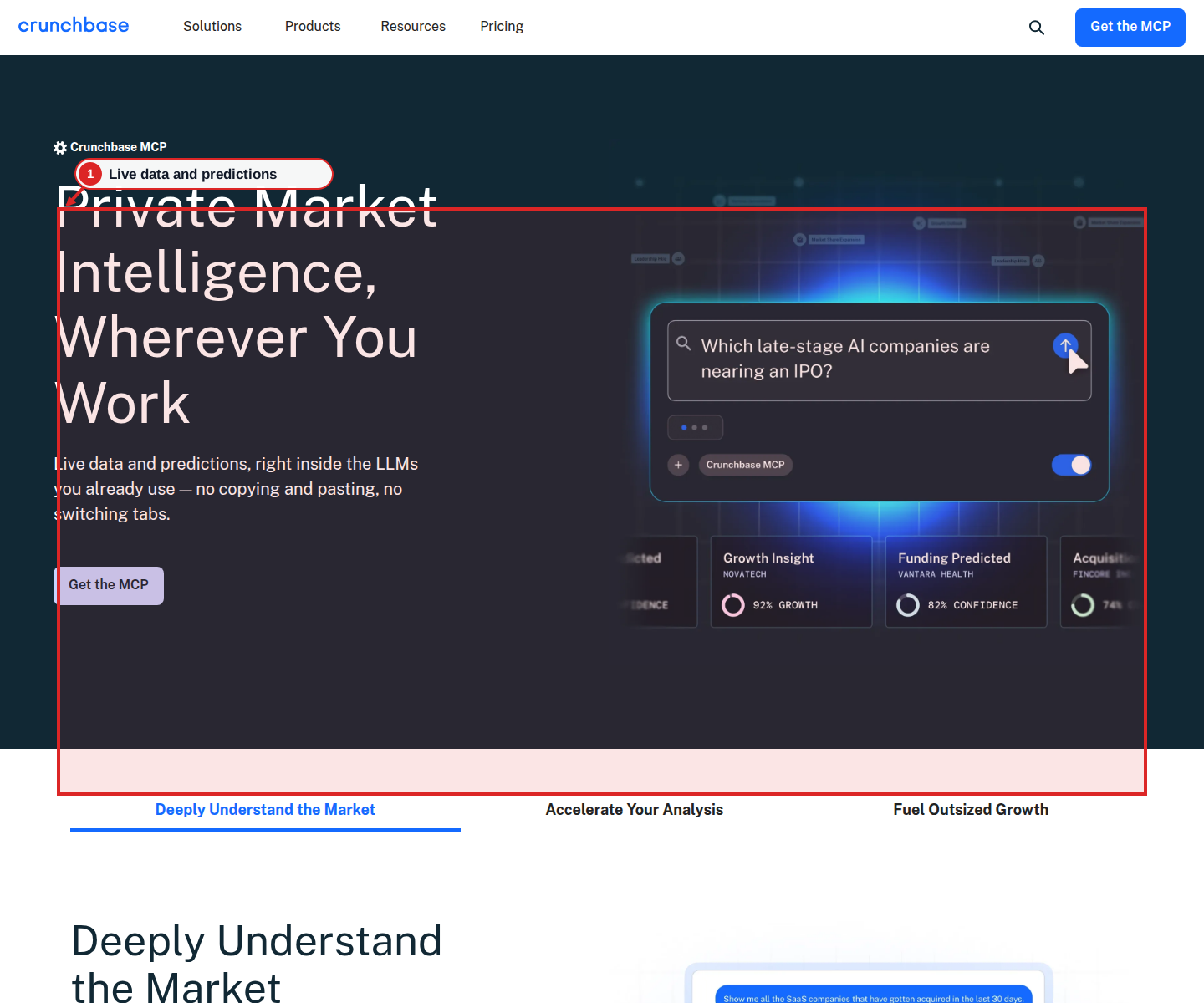
This full-context capture highlights the product detail that matters for this buyer. The source remains linked below the image so you can verify mutable claims on the current public page.
Source evidenceCrunchbase MCP page showing a private-market question inside an LLM interface.Show captureHide capture
A startup should optimize for learning velocity and usable output, not maximum database size. Start with a count, preview, and small verified test. Add private-company signals when they change prioritization. Add orchestration or a suite only after the ICP and workflow repeat often enough that automation pays back its own complexity.
Frequently asked questions
What should a SaaS startup test before buying data?
Test one narrow ICP, inspect the company fit and buying roles, verify a small contact set, measure reachability and replies, and calculate cost per usable contact before increasing volume.
Does funding mean a startup is ready to buy?
No. Funding can indicate capacity or change, but it does not prove need, timing, authority, or interest in a specific product.
When should a startup adopt Clay or another orchestration layer?
Adopt orchestration when the segment is proven and repeatable enrichment, custom research, routing, or CRM actions save more time and money than the workflow consumes.
What makes a data provider agent-ready?
Look beyond an API or MCP label. Test safe authentication, count and preview tools, permissions, spending controls, masking, reveal and export semantics, and the cost of the complete job.
Sources reviewed
Each source links to the vendor's current public product or documentation page. Vendor counts and performance statements remain attributed claims, not independent audit results.
6 sources checked and datedShow sources
Continue the research
Test the market definition
before buying the list.
Count and preview the segment, then reveal or export verified contacts only after the criteria hold up.