Best RocketReach alternatives for verified B2B contact data.
RocketReach is visible in email-finder search results and browser-extension prospecting, but many teams want clearer pricing, safer public previews, better verified-export workflows, or API/MCP access for automation. These RocketReach alternatives are worth testing before committing to a lookup-heavy workflow.
The right RocketReach alternative depends on what you are replacing: email lookup, phone numbers, browser prospecting, company pages, bulk exports, CRM enrichment, API access, or AI-agent data workflows. Start with the workflow, then compare usable output.
Best fit when the team wants a focused data layer rather than only browser lookup. Argorant shows aggregate company, email-format, and org-chart coverage publicly while keeping real contacts after sign-in and plan limits.
Relevant when the buyer wants prospecting, enrichment, sequences, dialer workflows, and AI/MCP actions together. Model credit usage carefully before switching.
A heavier alternative when the buying committee needs enterprise sales intelligence rather than a focused email-finder replacement.
Worth evaluating when phone-verified mobile numbers, European coverage, compliance posture, and CRM enrichment are central to the buying case.
A good shortlist option if the team wants to capture prospects from browser workflows and push them into existing outbound systems.
Narrower than RocketReach and usually not a phone-data or sales-intelligence replacement. Useful when email discovery and verification matter most.
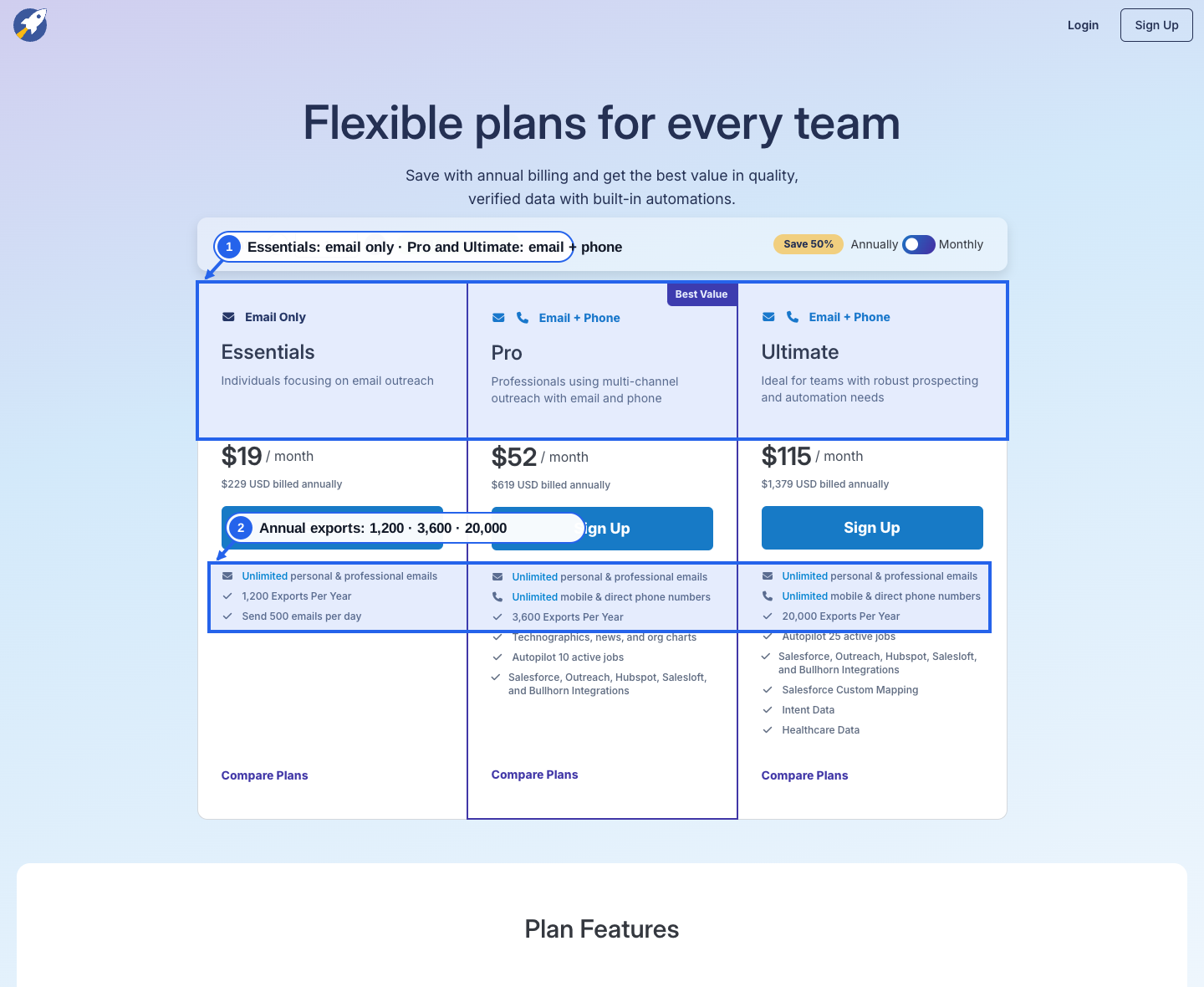
Public pricing is only the starting point. Compare plan details, credit rules, and the questions worth confirming before you switch.

Third-party references describe higher team pricing, user-based economics, and add-on lookup costs once teams need phones, integrations, and larger export volumes.
Published price versus quote-led terms
Credits and phone/email reveal costs
Export, CRM, API, and MCP access
Coverage quality in your target segment
Cancellation, renewal, and overage language
RocketReach is easy to find because it has a large public footprint around email formats, company profiles, and contact lookup. That makes it useful for discovery. The question is whether the paid workflow gives your team predictable access to the contacts, exports, phone data, API, and integrations you actually need.
Teams often start looking for alternatives when lookup limits, per-seat costs, phone-data gates, export rules, annual billing, or API access make the workflow harder to forecast. The right alternative is best judged by usable contacts, not by the size of the public profile database alone.

Use one controlled test across every provider: 25 companies, three buyer titles, two countries, and one export destination. Measure relevant contacts found, verified emails, phone availability, duplicate records, stale titles, export fields, API access, and time to move the list into your next workflow.
Then price the usable output. Include seats, lookups, exports, phone data, API usage, CRM sync, enrichment, re-verification, and manual cleanup. A tool that looks cheaper at the plan level can be more expensive if credits are consumed before the contact is actually usable.
Choose Argorant when the team wants verified contact data as a clean workflow layer. free tools and company pages can show company coverage, email-format patterns, org-chart signals, and comparison context without exposing real people publicly.
That is especially useful for founders, agencies, GTM engineers, RevOps teams, and AI SDR builders who need data they can export or query programmatically. Argorant's OAuth-protected MCP, masked previews, plan limits, and export caps are built for that use case.
RocketReach may still be better when a buyer wants a familiar lookup workflow, a large public profile surface, and a Chrome extension that supports browser-based prospecting on social sites and company pages.
If reps already work out of the RocketReach extension and the team is comfortable with the lookup/export economics, replacing it may not be urgent. The test is whether the same sample produces enough verified, export-ready contacts at a cost the team can predict.
Ask every vendor the same questions: what counts as a lookup, what counts as an export, whether failed lookups consume usage, whether phone data requires a higher tier, whether unused credits roll over, whether API calls are metered separately, and what happens when several users work from the same list.
For RocketReach specifically, public 2026 pricing guides disagree because individual, team, annual, monthly, regional, lookup, export, and API details can differ. Treat those guides as diligence inputs and verify the current checkout screen or quote before committing.
For verified contact data with privacy-first company pages, exports, API access, and MCP workflows, Argorant is the most direct alternative. Apollo is stronger if you also need sales engagement. ZoomInfo and Cognism are stronger for broader enterprise sales-intelligence workflows.
Common reasons include wanting clearer pricing, different lookup/export economics, better verified-export workflows, less browser-extension dependence, or a more programmable data layer for API and AI-agent workflows.
Public pricing guides describe RocketReach in terms of lookups, exports, and plan-based access. Buyers should confirm the current checkout or quote directly, including what actions consume usage and whether API or CRM workflows are separately limited.
If RocketReach is mainly used for occasional browser lookups, supplementing may be enough. If the team depends on verified exports, API access, enrichment, and repeatable list building, a focused alternative can replace more of the workflow.
Official pricing entry point. Buyers should verify the current checkout screen, annual/monthly toggle, team plan terms, exports, API access, and regional differences directly with RocketReach.
Chrome Web Store listing for RocketReach's prospecting extension, including publisher, ratings, user count, and extension positioning.
Third-party 2026 pricing review that cites RocketReach's pricing page and documentation; useful for plan mechanics and annual pricing context, not a substitute for a current quote.
Third-party 2026 guide covering plan tiers, lookup limits, per-seat economics, and annual billing assumptions. Treat figures as directional until verified at checkout.
Third-party 2026 competitor analysis discussing individual plans, team plans, mobile access, API/Salesforce gating, and lookup add-on costs.
Official pricing entry point; buyers should verify current plan names, credits, add-ons, and contract terms directly with Apollo.
Official explanation of credit usage for emails, phones, enrichment, API usage, AI research, domains, mailboxes, and dialer activity.
Official API overview describing people search, enrichment, company data, OAuth partner flows, and plan-based API access.
Official API pricing note explaining that advanced API access depends on the Apollo plan and that search/enrichment endpoints consume credits.
Official Apollo MCP documentation describing Claude connector workflows, available tools, credit usage, and plan limits.
Official pricing entry point; buyers should verify current package and contract details directly with ZoomInfo.
Company-filed description of ZoomInfo's platform, subscription model, and business context.
Third-party 2026 pricing estimate; useful for directional buyer research, not a substitute for a direct quote.
Third-party 2026 estimate and purchase-data summary for ZoomInfo SalesOS.
Official pricing entry point covering Standard, Pro, CRM Enrichment, Data-as-a-Service, credits, API/bulk delivery, and quote-led buying.
Official product positioning around premium B2B data, verified contact records, Data-as-a-Service, and API access.
Third-party 2026 comparison; useful for directional buyer diligence, not a substitute for a current Cognism quote.
Third-party 2026 pricing discussion; treat estimates and renewal notes as directional until verified in a contract.
Search verified contacts, export a clean list, and see whether Argorant fits your workflow before committing to a larger platform.
Start free