Best B2B Data for Commercial Contractors (2026)
Commercial contractors can buy project intelligence that reveals work already forming, or account and contact data that helps them reach owners, facilities, operations, and procurement before a tender. These are complementary acquisition motions, not interchangeable databases.
By Argorant
Reviewed and updated August 20, 2026 by Argorant
Bid earlier, or build relationships before the RFP exists
Use ConstructConnect, Glenigan, or Barbour ABI when project stage, planning, bid dates, plans, specifications, bidders, and daily alerts define the opportunity. Use CoStar when commercial real-estate companies, professionals, property expertise, and transaction context matter. Use Argorant when the contractor wants an always-on list of target owners, operators, facilities leaders, operations, and procurement contacts before an RFP. Many contractors need one project feed and one relationship-building data layer.
Do not compare unlike data products as one category
The right shortlist depends on the job the data must complete. These lanes can form one stack, but a specialist signal, a research database, and a verified-contact layer should not receive the same score for different work.
Find projects by planning, preconstruction, bidding, award, trade, value, and location.
Map recurring buyers and build direct relationships before work becomes a tender.
Find owners, developers, property managers, brokers, service providers, and market context.
The workflow this data must support
- 1Choose whether the immediate motion is bidding on projects or building recurring buyer relationships.
- 2For projects, filter by trade, region, building use, value, stage, planning status, and bid date.
- 3Inspect plans, specifications, bidder history, and project participants before assigning estimating time.
- 4For direct relationships, map owner and operator accounts in the service region and resolve facilities, operations, property, and procurement roles.
- 5Verify contacts and attach project or account context before outreach.
- 6Track project updates and repeat buyers separately so the team can measure bid-led and relationship-led pipeline.
Company filters
- Trade and MasterFormat or equivalent code
- Location and service radius
- Project stage, bid date, and planning status
- Building type, project value, and scope
- Owner, operator, property, and target-company profile
People and roles
- Facility Manager
- Head of Facilities
- Property owner or manager
- Operations Director
- Procurement or Purchasing Director
- General contractor, architect, or project owner contact
Exclusions
- Projects outside the service area or trade
- Projects below or above economic size limits
- Companies that are other contractors when the target is the owner or operator
- Awarded work with no realistic relationship value
- Contacts without project or account relevance
Provider comparison
Vendor-published counts and performance statements are labelled as vendor claims. The decisive question is whether the product completes this audience's workflow on a fixed, reproducible sample.
| Provider | Category | Best for | What it does | Decisive limitation |
|---|---|---|---|---|
| Argorant | Pre-RFP account and contact data | Contractors that want recurring relationships with owners, operators, facilities, operations, and procurement buyers. | Argorant maps the companies likely to own or operate the facilities a contractor serves, then resolves the relevant budget and procurement roles. | It does not provide permits, project stages, plans, specifications, bidder history, or tender deadlines. |
| ConstructConnect | North American project and bid intelligence | Contractors that need public and private project discovery, plans, specifications, bidder context, and bid workflow. | ConstructConnect centers the active construction opportunity. Teams can filter projects, inspect project documents and participants, track bids, and receive updates. | Project counts vary across current product pages and should not be compared without a same-day, same-definition capture. |
| Glenigan | UK and Ireland construction project intelligence | UK and Ireland teams that need planning and pre-planning opportunities, project contacts, alerts, and API access. | Glenigan tracks construction activity from early stages and combines project details with contact data and market research. | Its geographic strength is the UK and Ireland, and published research-volume claims should remain attributed. |
| Barbour ABI | UK construction project intelligence | UK construction sales teams that need project stages, researched contacts, bidder history, alerts, exports, and CRM or API delivery. | Barbour ABI follows projects from pre-planning through award, adds researcher-maintained contacts and bidder context, and supports exports and integrations. | Its value is project intelligence in the UK, not global owner and operator contact coverage. |
| CoStar Directory | Commercial real-estate professional and company network | Contractors and service providers that need CRE owners, property managers, developers, brokers, and transaction context. | CoStar Directory organizes commercial real-estate people and companies by business type, property expertise, transactions, listings, markets, and related news. | It is not a universal construction project or tender feed and should be evaluated for the exact property market and buyer type. |
What the public product page shows
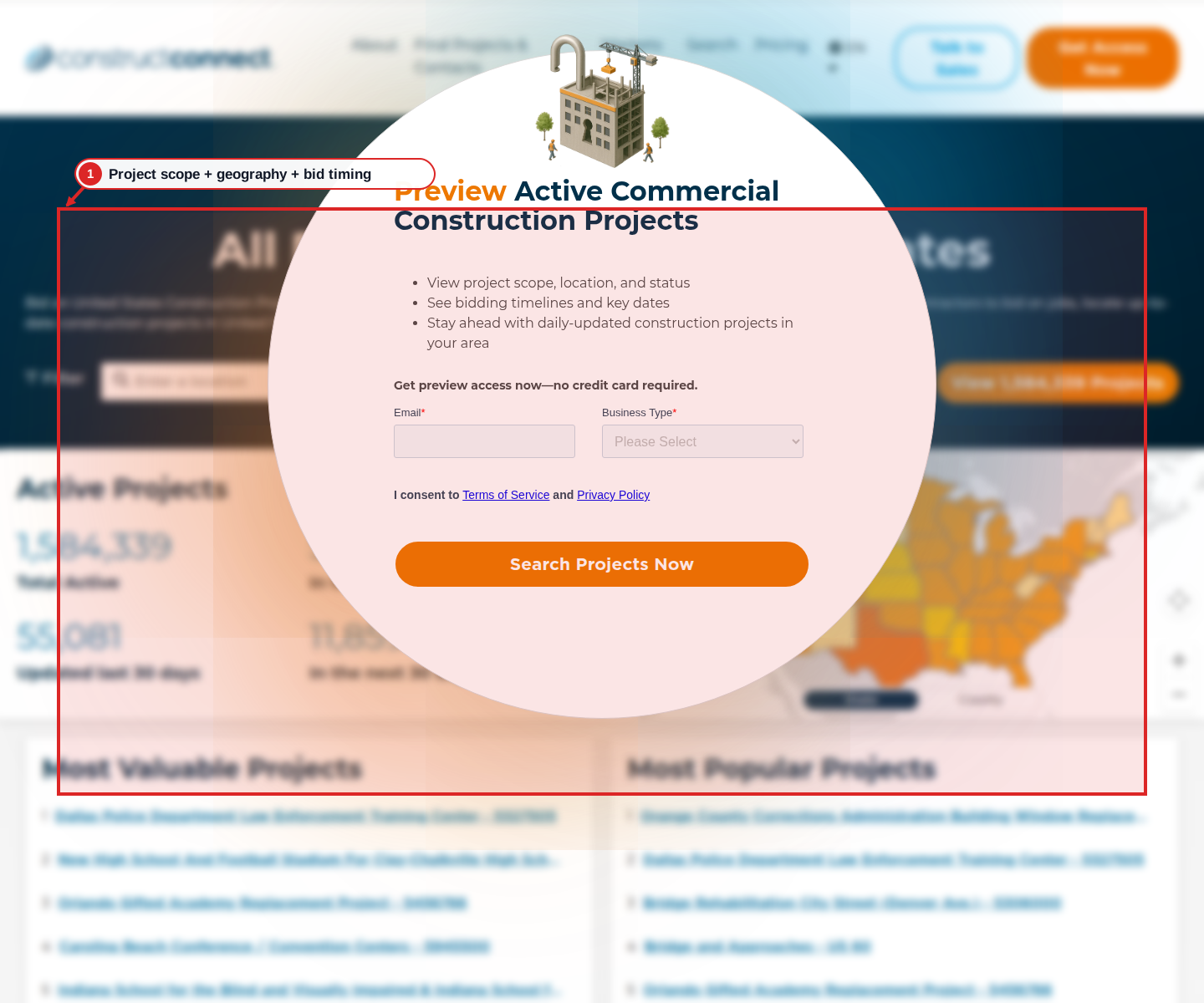
This full-context capture highlights the product detail that matters for this buyer. The source remains linked below the image so you can verify mutable claims on the current public page.
Source evidenceConstructConnect public project preview listing scope, location, status and bidding-timeline details.Show captureHide capture
Commercial contractors should not choose between projects and relationships as if only one can work. Project intelligence helps the team find and qualify work earlier. Account and contact intelligence helps the team build trust with recurring buyers before a tender exists. Track both motions separately, then invest where qualified pipeline and win economics are strongest.
Frequently asked questions
What is the difference between a construction project lead and a company contact?
A project lead describes work that may be planned, bidding, or awarded and includes project context. A company contact identifies a person at an owner, operator, contractor, or supplier. One does not imply the other.
Should contractors use project databases or direct outreach?
Project databases are useful when the team competes for active work. Direct account outreach is useful for building owner and operator relationships before work becomes a public bid. Many contractors benefit from both.
Which roles matter for pre-RFP outreach?
Common roles include Facility Manager, Head of Facilities, property owner or manager, Operations Director, Procurement Director, and Purchasing Director. The exact buyer changes by service and contract size.
How should contractors compare project coverage?
Use the same trade, region, building type, value, and time window. Compare unique relevant projects, stage accuracy, update latency, contact quality, document depth, and estimating hours saved. Raw project counts are not comparable without a shared definition.
Sources reviewed
Each source links to the vendor's current public product or documentation page. Vendor counts and performance statements remain attributed claims, not independent audit results.
6 sources checked and datedShow sources
Test the market definition
before buying the list.
Count and preview the segment, then reveal or export verified contacts only after the criteria hold up.