Best B2B Data for Marketing Agencies (2026)
Agencies do not need one generic database recommendation. They need a repeatable way to translate each client's ICP into a documented, verified audience and move it into the client's stack without mixing records, permissions, or spend.
By Argorant
Reviewed and updated August 20, 2026 by Argorant
Build auditable client lists without losing control of cost
Choose Argorant when the agency mainly needs a focused verified-contact layer that can feed different client systems through exports, API, CLI, or MCP. Choose Clay when enrichment waterfalls, custom research, and workflow orchestration are the core service. Choose Apollo when a client or agency wants data and engagement in one daily workspace. Choose Cognism for premium European phone-led prospecting, and Lusha when extension, signals, API, or MCP fit the operating model. Compare a worked client campaign, not vendor logo counts.
Do not compare unlike data products as one category
The right shortlist depends on the job the data must complete. These lanes can form one stack, but a specialist signal, a research database, and a verified-contact layer should not receive the same score for different work.
Build and verify a fresh audience for each client without buying a full engagement suite.
Combine several sources, custom research, enrichment, signals, and workflow logic.
Keep prospecting, enrichment, and outreach execution in one product.
The workflow this data must support
- 1Capture the client's ICP, exclusions, geography, buying roles, and evidence standard.
- 2Run a count and coverage test before committing enrichment or reveal spend.
- 3Choose a focused source, specialist provider, or waterfall based on the hard fields in the brief.
- 4Verify contact channels and inspect a sample before the full export.
- 5Attach client, campaign, source date, filters, and suppression lineage to every record.
- 6Report cost per client-ready contact and downstream outcomes, then refresh or retire the audience deliberately.
Company filters
- Client-specific sector and company profile
- Geography and territory
- Employee, revenue, funding, and growth bands
- Technology and signal criteria where relevant
- Named-account and lookalike definitions
People and roles
- Client-specific buying function
- Economic buyer
- Champion and technical evaluator
- Founder or owner for SME offers
- Operations, marketing, revenue, finance, or technology leadership as required
Exclusions
- Existing customers and open opportunities
- Competitors and partner accounts
- Records owned by another client
- Suppressed, opted-out, and duplicate contacts
- Companies without support for the campaign hypothesis
Provider comparison
Vendor-published counts and performance statements are labelled as vendor claims. The decisive question is whether the product completes this audience's workflow on a fixed, reproducible sample.
| Provider | Category | Best for | What it does | Decisive limitation |
|---|---|---|---|---|
| Argorant | Focused verified-contact layer | Agencies that already have campaign infrastructure and need fresh lists for many client ICPs. | Argorant can count, preview, reveal, verify, and export contacts through the app and programmatic interfaces. It fits agencies that want data to move into an existing stack. | Argorant organizes work by workspace, lists and campaigns. If you need separate sub-accounts or separate billing per client, check that before you choose it. |
| Clay | Data orchestration and GTM workflows | Agencies that combine providers, custom signals, AI research, enrichment, and campaign logic. | Clay is an orchestration layer. It connects a provider marketplace, waterfalls, signals, research agents, CRM workflows, sequencing, and MCP rather than acting like one comparable database. | Agencies must model the complete workflow and provider-credit cost. The number of available integrations does not reveal cost per client-ready contact. |
| Apollo | Bundled data and sales engagement | Agencies or clients that want prospect data, enrichment, sequences, and workflow in one product. | Apollo combines lead data with a broader GTM workspace. It can reduce tool count when the same team builds lists and runs the sequence. | Bundling changes credit economics, client governance, and replacement risk. It should not be compared with a data-only product on nominal contact price alone. |
| Cognism | Premium European sales intelligence | Agency clients that value European compliance context, phone-verified mobiles, signals, and CRM delivery. | Cognism focuses on premium phone-led prospecting and European data operations, with contact and company signals plus CRM workflows. | Its packaging is sales-led, and vendor claims about connect rates or coverage must remain attributed rather than treated as universal results. |
| Lusha | Contact data, signals, extension, API, and MCP | Agencies that want flexible workspace and programmatic access with lookalikes and buying signals. | Lusha combines people and company data with browser, workspace, API, MCP, signals, and lookalike workflows. | Corpus and accuracy figures are vendor claims, and multi-client operating controls must be tested rather than assumed. |
What the public product page shows
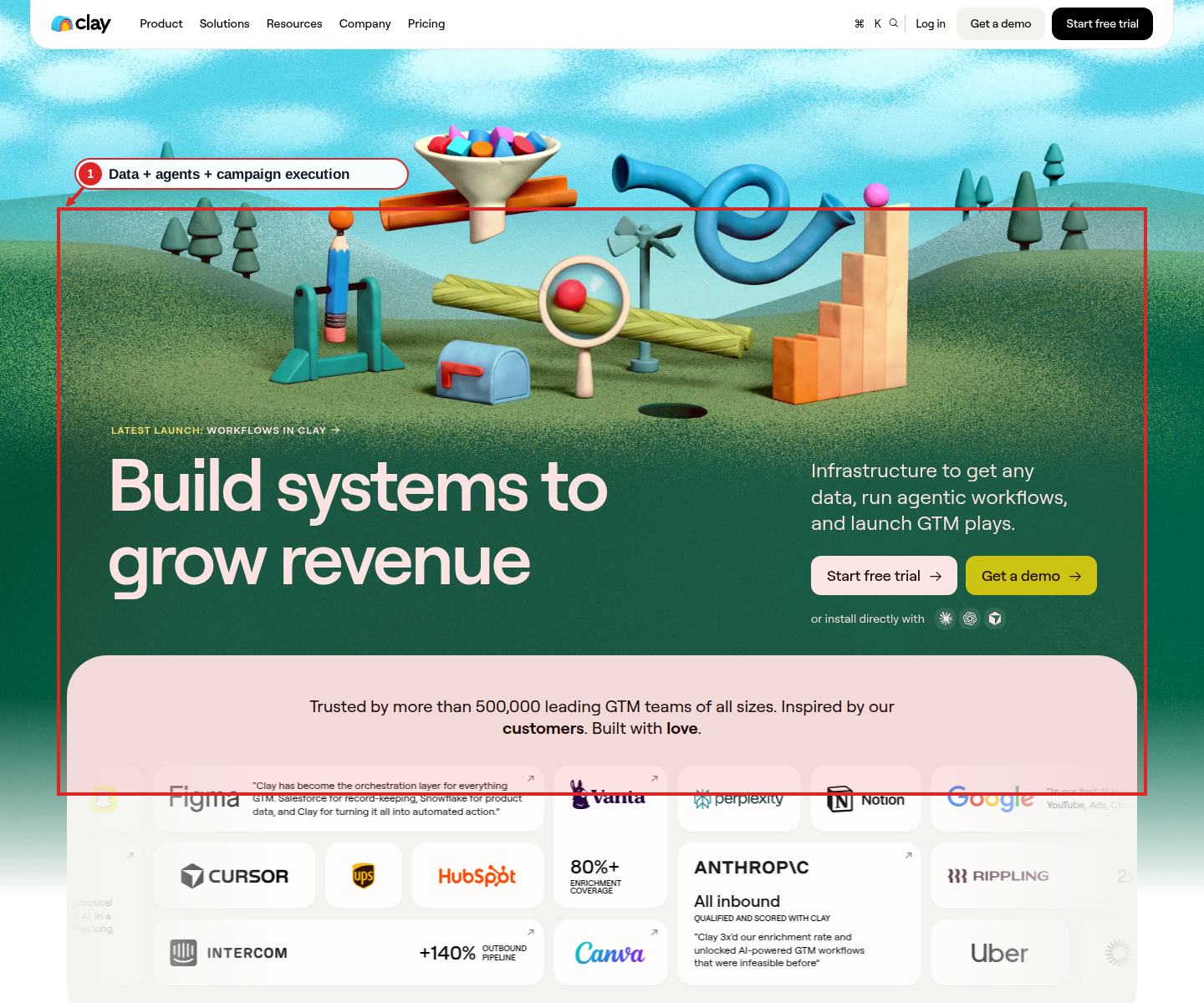
This full-context capture highlights the product detail that matters for this buyer. The source remains linked below the image so you can verify mutable claims on the current public page.
Source evidenceClay homepage describing data infrastructure, agentic workflows and GTM plays.Show captureHide capture
The agency's moat is not access to a giant database. It is the ability to translate a client strategy into an auditable audience, verify it, and show what it cost to produce. Choose the lightest stack that preserves client separation and selection logic. Add orchestration only when custom enrichment and workflow complexity create real client value.
Frequently asked questions
What is the best data model for an agency with many clients?
Use a repeatable intake, count, sample, verification, export, and lineage process. The provider matters, but client separation, suppression, ownership, and cost attribution matter just as much.
Is Clay a B2B database?
Clay is better understood as data and workflow orchestration. It can access and combine many providers, run custom research, and move enriched records into downstream systems.
Should an agency use a bundled engagement platform?
A bundled platform can reduce tool count when the same workflow owns prospecting and sending. A modular data layer is often better when clients bring their own CRM, sequencer, governance, or provider preferences.
How should agencies compare data economics?
Measure cost per client-ready contact after search, enrichment, verification, duplication, suppression, and failed records. Do not compare raw credits that purchase different actions.
Sources reviewed
Each source links to the vendor's current public product or documentation page. Vendor counts and performance statements remain attributed claims, not independent audit results.
6 sources checked and datedShow sources
Continue the research
Test the market definition
before buying the list.
Count and preview the segment, then reveal or export verified contacts only after the criteria hold up.