Best B2B Data for Private Equity Deal Sourcing (2026)
Private equity teams need two layers that are often sold as one. Private-market intelligence decides which companies belong in the thesis. Contact infrastructure identifies and verifies the owner, CEO, or CFO who can start a proprietary conversation.
By Argorant
Reviewed and updated August 20, 2026 by Argorant
Build the thesis universe, then reach the owners inside it
Use PitchBook, Inven, or Grata when ownership, transactions, private-company financials, and thesis-level market mapping drive the decision. Use Argorant when the thesis is already clear and the bottleneck is turning a company universe into verified owner and executive contacts through UI, API, CLI, or MCP. A combined stack is the honest default for teams that need both defensible research and outbound execution.
Do not compare unlike data products as one category
The right shortlist depends on the job the data must complete. These lanes can form one stack, but a specialist signal, a research database, and a verified-contact layer should not receive the same score for different work.
Discover and qualify companies using ownership, transactions, financials, and sector context.
Resolve owners and executives, verify contact details, and move the list into outreach systems.
Combine thesis research with repeatable contact production and monitoring.
The workflow this data must support
- 1Translate the investment thesis into business model, niche, geography, size, and ownership criteria.
- 2Map the private-company universe and preserve source context for every inclusion decision.
- 3Screen ownership, sponsor status, growth, transactions, and financial fit where the research layer supports them.
- 4Resolve the owner, founder, CEO, Managing Director, CFO, or relevant operating executive.
- 5Verify the contact and route the target into the deal CRM with thesis and source lineage intact.
- 6Monitor company and ownership changes, then refresh the contact layer before each new outreach wave.
Company filters
- Business model and niche keywords
- Country and headquarters geography
- Revenue or headcount proxy
- Ownership and PE-backing status
- Growth, acquisitions, funding, and transaction signals
People and roles
- Founder or owner
- Chief Executive Officer
- Managing Director
- Chief Financial Officer
- Board member
- Operating executive for add-on sourcing
Exclusions
- Already-owned assets when the thesis excludes them
- Listed companies when the strategy is private-only
- Service providers and advisers
- Wrong business model or size band
- Out-of-region headquarters and duplicate legal entities
Provider comparison
Vendor-published counts and performance statements are labelled as vendor claims. The decisive question is whether the product completes this audience's workflow on a fixed, reproducible sample.
| Provider | Category | Best for | What it does | Decisive limitation |
|---|---|---|---|---|
| Argorant | Verified contact execution | PE teams that know the thesis and need scalable owner and executive contact production. | Argorant converts a company and role definition into a count, preview, and verified export. Its strength is operational contact access across the app and agent interfaces. | It does not replace ownership-grade research, transaction comps, or private-company diligence. |
| PitchBook | Private-capital intelligence | Institutional teams that need transactions, fund activity, financial context, and advanced private-market screening. | PitchBook combines private-market research with deal-sourcing filters, contacts, and alerts. It is the broad intelligence option when sourcing decisions depend on more than a website and job title. | The product is broader than verified outreach execution, and commercial terms are sales-led rather than a simple pay-per-contact path. |
| Inven | AI-native private-market discovery | Teams that want natural-language thesis search, bulk screening, and market mapping across private companies. | Inven turns a written thesis into a company universe and adds ownership, growth, deal context, bulk analysis, and executive contacts in one M&A-oriented workspace. | Published corpus and performance figures are vendor claims. Relevant recall and source quality must be tested on the firm's own niche. |
| Grata by Datasite | Private-market intelligence and buyer research | PE teams that need ownership, financial, transaction, and executive context with CRM integration. | Grata is built for private-company discovery and transaction-oriented research. It combines AI synthesis, human validation, ownership, financials, signals, executive contacts, and deal workflow integrations. | Its coverage and accuracy numbers are vendor-provided, and it is not a low-friction substitute for a focused contact export layer. |
What the public product page shows
This full-context capture highlights the product detail that matters for this buyer. The source remains linked below the image so you can verify mutable claims on the current public page.
Source evidenceDatasite Grata product page with private-company search, AI filtering and company results.Show captureHide capture
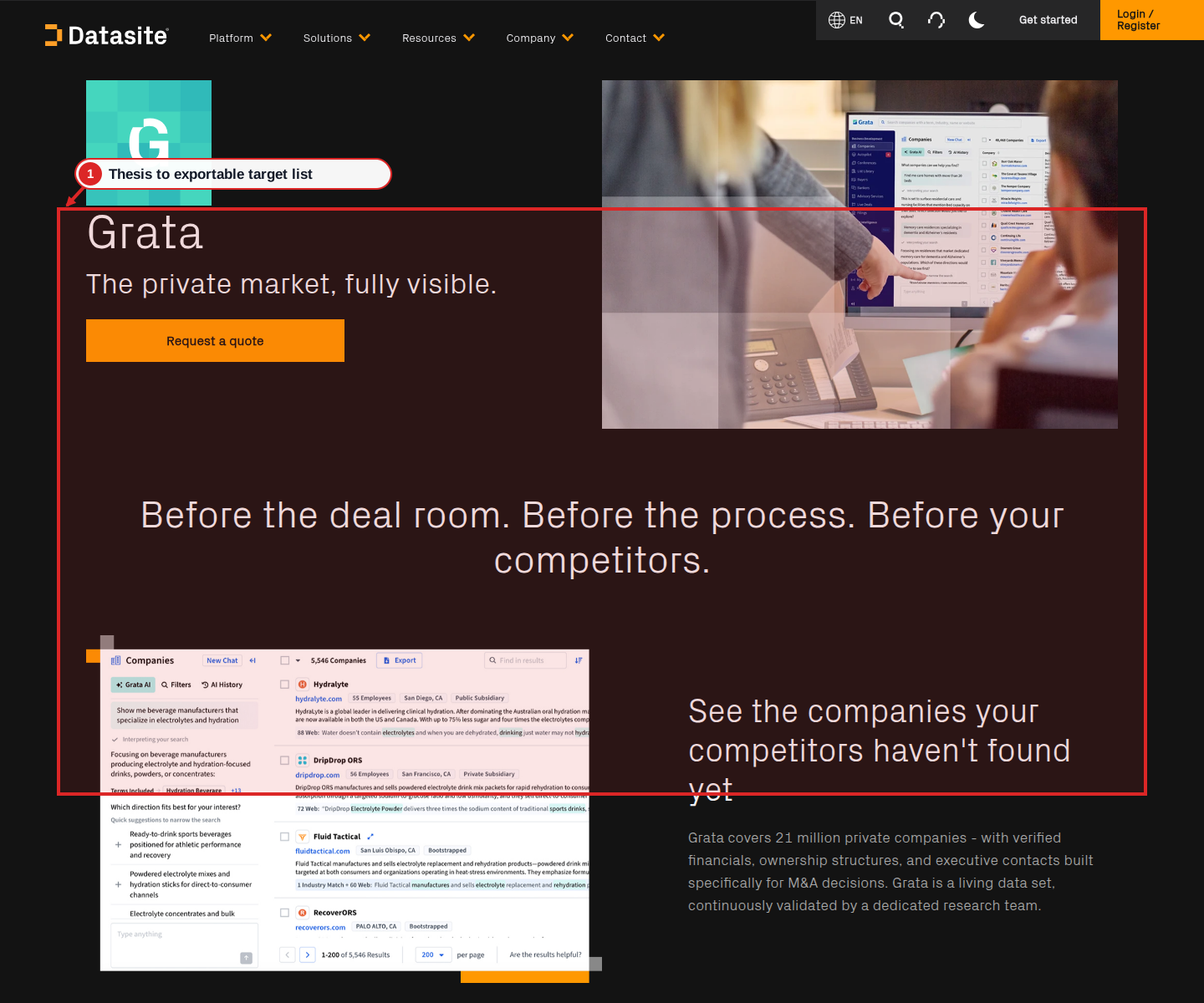
Private equity teams should not force one database to answer every sourcing question. Use private-market intelligence to decide which companies deserve an origination thesis. Use verified contact infrastructure to reach the people who can engage with it. The useful denominator is not records per seat. It is the cost and time required to produce a defensible target with a reachable owner.
Frequently asked questions
Can a B2B contact database replace PitchBook, Inven, or Grata?
Not when the decision depends on ownership, transaction history, private financials, or investment-grade source context. A contact database can complement that work by resolving and verifying the people at the selected companies.
What should a PE sourcing tool prove in a pilot?
Test one real thesis. Measure relevant company recall, false positives, ownership and source quality, executive coverage, export friction, and the cost of contacts the origination team can actually use.
Do company signals prove an owner wants to sell?
No. Hiring, funding, succession, or transaction signals can change priority, but they do not establish willingness to transact.
When does a hybrid stack make sense?
A hybrid stack is justified when the team runs recurring sourcing programs and needs both defensible market mapping and high-volume owner contact execution. One-off searches may not justify both layers.
Sources reviewed
Each source links to the vendor's current public product or documentation page. Vendor counts and performance statements remain attributed claims, not independent audit results.
6 sources checked and datedShow sources
Continue the research
Test the market definition
before buying the list.
Count and preview the segment, then reveal or export verified contacts only after the criteria hold up.