Best B2B Data for M&A Advisory (2026)
M&A advisers need a buy-side longlist, a sell-side buyer universe, and reliable access to the people who can move a transaction forward. The best data stack preserves why each company belongs, not just how many names fit in an export.
By Argorant
Reviewed and updated August 20, 2026 by Argorant
Build defensible target and buyer universes for every mandate
Use Grata, Inven, or PitchBook when ownership, acquisition history, transaction context, and client-ready source traceability define the mandate. Use Argorant to turn a qualified target or buyer universe into verified owner, CFO, corporate development, and M&A contacts. Do not ask a contact database to validate buyer strategy or a transaction database to optimize outreach economics by default.
Do not compare unlike data products as one category
The right shortlist depends on the job the data must complete. These lanes can form one stack, but a specialist signal, a research database, and a verified-contact layer should not receive the same score for different work.
Find and qualify acquisition targets that match the mandate thesis.
Map sponsors and strategic acquirers using ownership, acquisition history, sector, and size fit.
Resolve and verify the owners, executives, corporate development leaders, and sponsor professionals behind the list.
The workflow this data must support
- 1Translate the mandate into target or buyer criteria before opening a database.
- 2Build the longlist with ownership, size, transaction, and strategic context where available.
- 3Preserve the source and inclusion reason for every company so the list can survive client review.
- 4Resolve owners and executives for buy-side work, or corporate development and sponsor roles for sell-side work.
- 5Verify contact details and move the list into the mandate CRM with duplicate and exclusion controls.
- 6Track contact, ownership, and transaction changes until the mandate closes or the universe is retired.
Company filters
- Business model and sector adjacency
- Geography and acquisition appetite
- Company size and financial profile
- Ownership and sponsor portfolio
- Acquisition history and transaction activity
People and roles
- Owner or founder
- Chief Executive Officer
- Managing Director
- Chief Financial Officer
- Head of Corporate Development
- Head of M&A or strategy
- Private equity partner or investment professional
Exclusions
- Direct competitors excluded by the client
- Existing relationships already owned by the team
- Wrong geography or transaction size
- Advisers and service firms in the company universe
- Duplicate brands, subsidiaries, and legal entities
Provider comparison
Vendor-published counts and performance statements are labelled as vendor claims. The decisive question is whether the product completes this audience's workflow on a fixed, reproducible sample.
| Provider | Category | Best for | What it does | Decisive limitation |
|---|---|---|---|---|
| Argorant | Verified contact execution | Advisers that already have a qualified universe and need owner, CFO, corporate development, or M&A contacts. | Argorant supports company and role searches, previews, and verified exports for both target and buyer outreach. It is strongest after the adviser has decided why a company belongs. | It does not validate ownership, financials, valuation, acquisition appetite, or mandate fit. |
| Grata by Datasite | Private-market and buyer intelligence | Advisers that need ownership, acquisition history, sector focus, financial profile, and buyer-list workflow. | Grata's public product is explicit about buyer-list construction. It combines private-company research with ownership, financial, transaction, sponsor, and executive context. | Its Deal Network and coverage figures are vendor-provided. They should not be described as complete market visibility. |
| Inven | AI-native market mapping | M&A teams that want natural-language target discovery, bulk analysis, decision-maker contacts, and export workflows. | Inven combines private-company discovery, custom screening, professional contacts, CRM sync, and pipeline management in an M&A-oriented product. | Published customer outcomes and corpus figures must remain attributed and cannot be treated as expected results for every mandate. |
| PitchBook | Private-capital intelligence | Advisers that need transaction, financial, fund, market, and contact context in one institutional platform. | PitchBook gives advisers a broad private-capital research layer for company screening, market analysis, transaction context, and relationship discovery. | Its breadth and sales-led packaging may exceed the needs of a boutique whose immediate bottleneck is verified contact execution. |
What the public product page shows
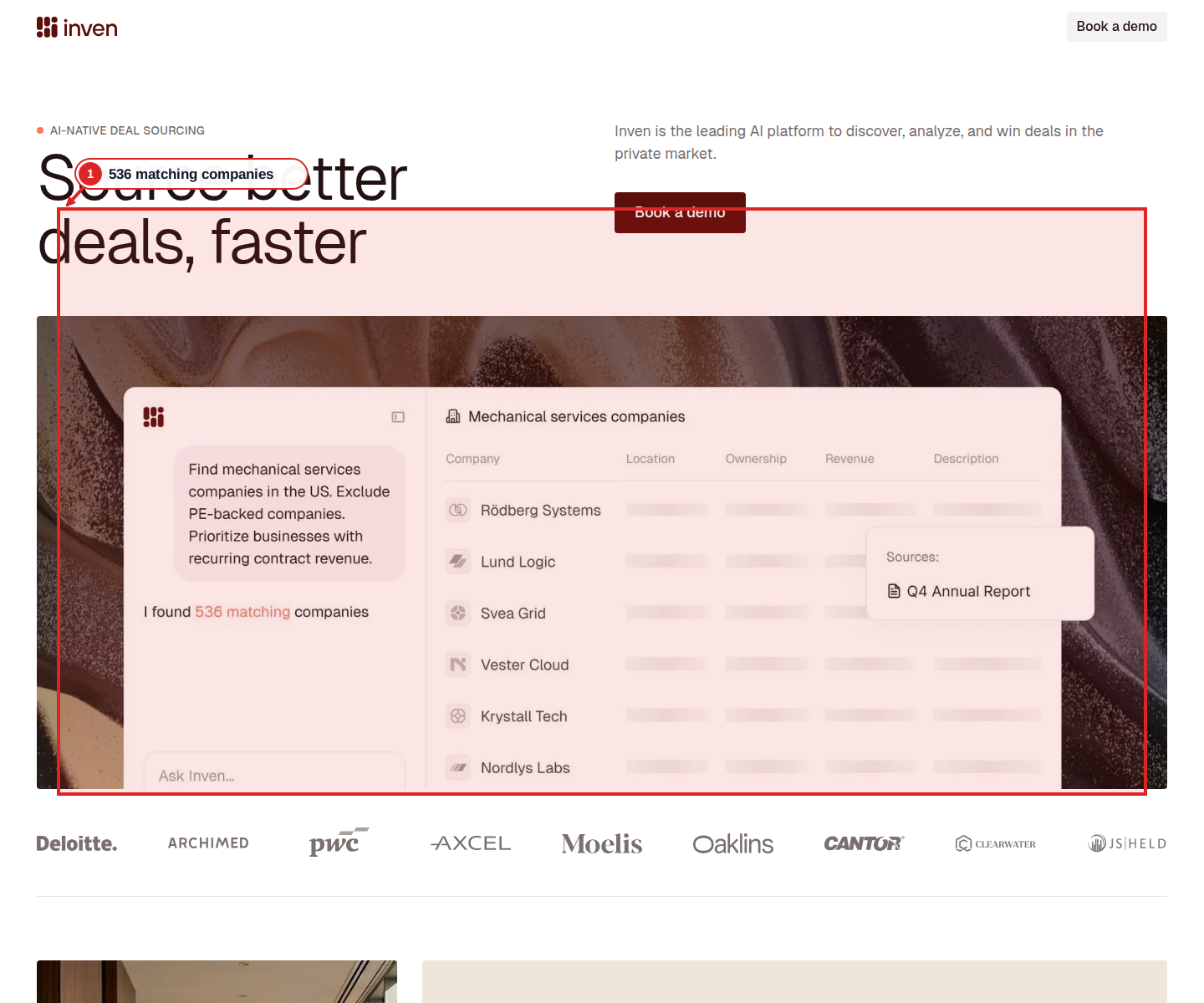
This full-context capture highlights the product detail that matters for this buyer. The source remains linked below the image so you can verify mutable claims on the current public page.
Source evidenceInven deal-sourcing page showing a natural-language company query, matching results and cited sources.Show captureHide capture
The cheapest M&A database is not the one with the lowest nominal seat price. It is the stack that produces a defensible longlist, survives partner and client scrutiny, and gets the right decision-maker into a live conversation early in the mandate. Keep research quality and contact execution separate enough that each can be measured honestly.
Frequently asked questions
Why is M&A advisory different from private equity deal sourcing?
Advisers must support both buy-side target lists and sell-side buyer universes. They also need client-ready source traceability and mandate-specific exclusions that an internal PE origination team may handle differently.
What makes a sell-side buyer universe defensible?
The list should show strategic relevance, ownership, acquisition history, geographic and size appetite, the source for each conclusion, and the people who can sponsor the transaction.
Can contact data tell us whether a buyer is likely?
No. Contact data identifies who works at the company. Buyer likelihood needs strategic, transaction, ownership, and mandate-specific evidence.
What should advisers test before buying a platform?
Run one real mandate. Compare target recall, false positives, buyer relevance, source traceability, ownership quality, contact coverage, export workflow, and time to a client-ready longlist.
Sources reviewed
Each source links to the vendor's current public product or documentation page. Vendor counts and performance statements remain attributed claims, not independent audit results.
4 sources checked and datedShow sources
Continue the research
Test the market definition
before buying the list.
Count and preview the segment, then reveal or export verified contacts only after the criteria hold up.