Best B2B Data Providers for Recruitment Agency Business Development (2026)
Recruitment agencies buy data for two different jobs: winning employer clients and finding candidates after a mandate exists. This guide keeps those jobs separate, then compares broad employer data, live hiring signals, and candidate sourcing tools on the result each one can actually produce.
By Argorant
Reviewed and updated August 20, 2026 by Argorant
Choose data that helps your desk win the next mandate
Start with Argorant when the immediate job is mapping a broad employer universe and reaching owners, HR leaders, or operations decision-makers with verified business contacts. Add CrewSnap or Leedo when a live hiring event is valuable enough to justify specialist signal data. Use Lusha or LinkedIn Recruiter for candidate sourcing after the mandate exists, not as proof that an employer is ready to buy agency services.
Do not compare unlike data products as one category
The right shortlist depends on the job the data must complete. These lanes can form one stack, but a specialist signal, a research database, and a verified-contact layer should not receive the same score for different work.
Map the companies and budget owners that can award a staffing or search mandate.
Find employers showing current demand through vacancies, growth, or hiring activity.
Source and contact people who may fit an open assignment.
The workflow this data must support
- 1Define the desk by role family, sector, geography, and minimum client economics.
- 2Map serviceable employers before adding hiring signals, so the desk can see the whole territory.
- 3Prioritize companies with relevant vacancies, headcount growth, funding, or office expansion where the source supports those signals.
- 4Identify the actual buying role: HR leadership, talent acquisition, the line hiring manager, operations, or the SME owner.
- 5Verify the business contact, export it with the selection reason, and route it into the CRM or sequencer.
- 6Record whether the outreach created a mandate, then refine the employer definition separately from candidate sourcing performance.
Company filters
- Sector and desk specialism
- Country, region, and service radius
- Employee band and hiring volume
- Open role family and seniority
- Funding, growth, and office expansion
People and roles
- HR Director
- Head or VP of Talent Acquisition
- Chief People Officer
- Relevant line hiring manager
- Operations Director
- Owner or Managing Director for SME staffing
Exclusions
- Recruitment agencies and job boards
- RPO providers when they are not the target buyer
- Employers outside delivery geography
- Companies below the desk's minimum placement economics
- Candidate records mixed into the employer campaign
Provider comparison
Vendor-published counts and performance statements are labelled as vendor claims. The decisive question is whether the product completes this audience's workflow on a fixed, reproducible sample.
| Provider | Category | Best for | What it does | Decisive limitation |
|---|---|---|---|---|
| Argorant | Employer client data and verified contact execution | Agencies that need a complete employer territory, senior buyer roles, and verified contact exports. | Argorant starts with the paying employer side. A desk can define the market by company and geography, then reach owners, Managing Directors, HR leaders, and operations buyers through the same search and export workflow. | It is not a candidate database and is not built for skills-based candidate sourcing. |
| CrewSnap Leads | Recruitment agency hiring signals | Staffing sales teams that want current vacancies tied to likely hiring-manager contacts. | CrewSnap begins with a company hiring in the agency's niche, identifies the role, and attaches contact information for the hiring manager. That makes timing the product, not merely record volume. | A hiring event is a useful signal, but it does not prove that the employer will use an external agency. |
| Leedo | Recruitment agency BD intelligence | Recruitment agencies that want job activity, hiring signals, and buyer contacts in one specialist workflow. | Leedo is designed around agency business development. It links vacancies and growth signals to hiring managers and internal talent acquisition contacts, then supports outreach from the agency's mailbox. | Its live-job and signal quantities are vendor claims, and specialist coverage should be tested on the agency's exact desk before purchase. |
| Lusha | Candidate contact data | Recruiters that already have a role and need candidate search, contact reveals, and ATS delivery. | Lusha's recruiter workflow uses role, skills, and location to find candidates, then reveals contact details and supports Chrome and ATS workflows. | Candidate sourcing does not identify which employers are likely to award a staffing mandate. |
| LinkedIn Recruiter | Candidate sourcing workspace | Recruiting teams that want profile-led candidate discovery and AI-assisted search from an intake brief. | LinkedIn Recruiter interprets a job description or intake notes and turns them into candidate-search criteria. It is the clearest baseline for candidate discovery, not agency client acquisition. | Its core search job is finding talent for a role, not producing verified employer-client lists for outbound business development. |
What the public product page shows
This full-context capture highlights the product detail that matters for this buyer. The source remains linked below the image so you can verify mutable claims on the current public page.
Source evidenceCrewSnap sales-lead page showing hiring activity, contact emails, decision-makers and recency.Show captureHide capture
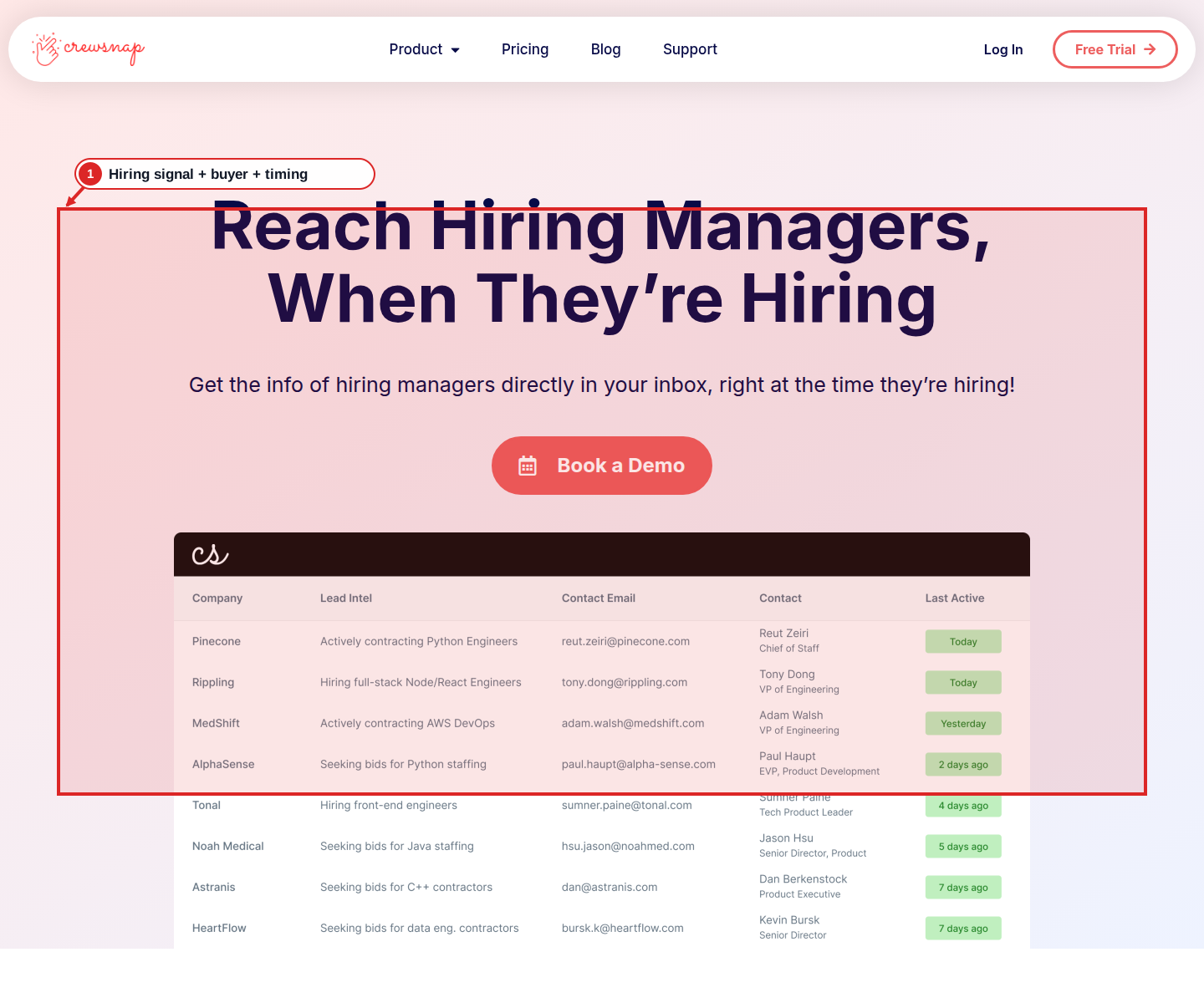
A recruitment desk does not need the largest undifferentiated record count. It needs a reliable way to spot serviceable employers, identify the person who can award a mandate, and act while the need is current. Build broad employer coverage first, add specialist timing signals where they change behavior, and keep candidate sourcing as a separate workflow with separate success metrics.
Frequently asked questions
What is the difference between recruitment BD data and candidate data?
Recruitment BD data identifies employers and the people who can buy staffing or search services. Candidate data identifies people who may fill an open role. Mixing the two produces a poor vendor comparison and an even worse campaign.
Does an open vacancy mean a company will use an agency?
No. A vacancy is a timing signal, not proof of external agency intent. It should prioritize a qualified employer account, not replace qualification.
Which roles should a staffing agency contact?
Enterprise staffing often starts with HR or talent acquisition leadership. Specialist desks may need the line hiring manager. SME staffing frequently converts through the owner, Managing Director, or operations lead who controls the budget directly.
Should agencies buy one platform for clients and candidates?
Only if the platform is genuinely strong at both jobs. Many agencies are better served by one employer-client data source and a separate candidate sourcing system because coverage, signals, and success metrics differ.
Sources reviewed
Each source links to the vendor's current public product or documentation page. Vendor counts and performance statements remain attributed claims, not independent audit results.
5 sources checked and datedShow sources
Test the market definition
before buying the list.
Count and preview the segment, then reveal or export verified contacts only after the criteria hold up.