Best B2B Data for Wholesale and Trade (2026)
A manufacturer finding suppliers, a distributor finding retailers, and a wholesaler finding purchasing teams are not doing the same job. Product taxonomies and supplier capabilities matter on one side. Reachable buying roles and territory coverage matter on the other.
By Argorant
Reviewed and updated August 20, 2026 by Argorant
Choose data for the direction of trade
Use Kompass or Thomasnet when product classification, supplier discovery, capabilities, certifications, or active sourcing behavior define the job. Use Argorant when the business needs direct access to retailers, resellers, distributors, owners, purchasing leaders, category managers, or Heads of Buying in a target territory. Use D&B Hoovers when broad global company and contact intelligence is worth a larger general-purpose platform. Choose by whether you are sourcing supply or winning trade customers.
Do not compare unlike data products as one category
The right shortlist depends on the job the data must complete. These lanes can form one stack, but a specialist signal, a research database, and a verified-contact layer should not receive the same score for different work.
Find companies that can make, supply, certify, or distribute a specific product or service.
Map retailers, resellers, distributors, and the people who approve suppliers or assortments.
Combine global company profiles, segmentation, contacts, and CRM workflows.
The workflow this data must support
- 1Define whether the business is sourcing a supplier or acquiring a trade customer.
- 2Map product category, territory, company type, size, capabilities, and certifications where relevant.
- 3For supplier sourcing, qualify capability and reliability before requesting contact details or quotes.
- 4For customer acquisition, identify purchasing, category, buying, procurement, owner, or Managing Director roles.
- 5Verify the contact and export the territory list with product and account rationale attached.
- 6Maintain the map as suppliers, buyers, categories, and territories change.
Company filters
- Product and service classification
- Supplier, distributor, reseller, or retailer type
- Country, region, and export territory
- Certifications and capabilities
- Company size and trade category
People and roles
- Purchasing Director
- Purchasing Manager
- Category Manager
- Head of Buying
- Procurement Director
- Merchandising leader
- Owner or Managing Director
Exclusions
- Companies on the wrong side of the trade motion
- Suppliers without required capability or certification
- Retailers outside the serviceable territory
- Generic inboxes when a direct buying role is required
- Duplicate branches, brands, and legal entities
Provider comparison
Vendor-published counts and performance statements are labelled as vendor claims. The decisive question is whether the product completes this audience's workflow on a fixed, reproducible sample.
| Provider | Category | Best for | What it does | Decisive limitation |
|---|---|---|---|---|
| Argorant | Trade customer and buyer contact data | Suppliers, wholesalers, and distributors that need target accounts and direct purchasing or owner contacts. | Argorant maps companies in a territory and resolves the people who control purchasing, categories, procurement, or owner-led supplier decisions. | It does not verify supplier certifications, production capability, capacity, RFQ intent, or commercial reliability. |
| Kompass EasyBusiness | Global buyer, supplier, and company data | Trade teams that need product-oriented segmentation, supplier and buyer discovery, global territories, and exports. | Kompass organizes companies through a trade and product taxonomy, then supports company, contact, market, CRM, and export workflows across many countries. | Published corpus figures are vendor claims, and directory or company membership does not mean a direct buyer email is verified. |
| Thomasnet | North American industrial supplier discovery | Industrial buyers and suppliers that need product, capability, certification, and sourcing-network context. | Thomasnet is a North American industrial sourcing network. Buyers search suppliers by capabilities and certifications, while suppliers create profiles to appear in active sourcing journeys. | It is not a global downloadable people database, and supplier discovery should not be described as verified outbound contact coverage. |
| D&B Hoovers Essentials | Broad global sales intelligence | Trade teams that need a general company and contact database with deep segmentation beyond one industry network. | D&B Hoovers combines commercial company profiles, contacts, filters, list building, and sales-intelligence workflow across sectors and markets. | Broad commercial coverage does not replace product taxonomy, supplier qualification, or active RFQ intent. |
What the public product page shows
This full-context capture highlights the product detail that matters for this buyer. The source remains linked below the image so you can verify mutable claims on the current public page.
Source evidenceArgorant wholesale page showing buyer-role chips and market-size counts for retailers and purchasing leaders.Show captureHide capture
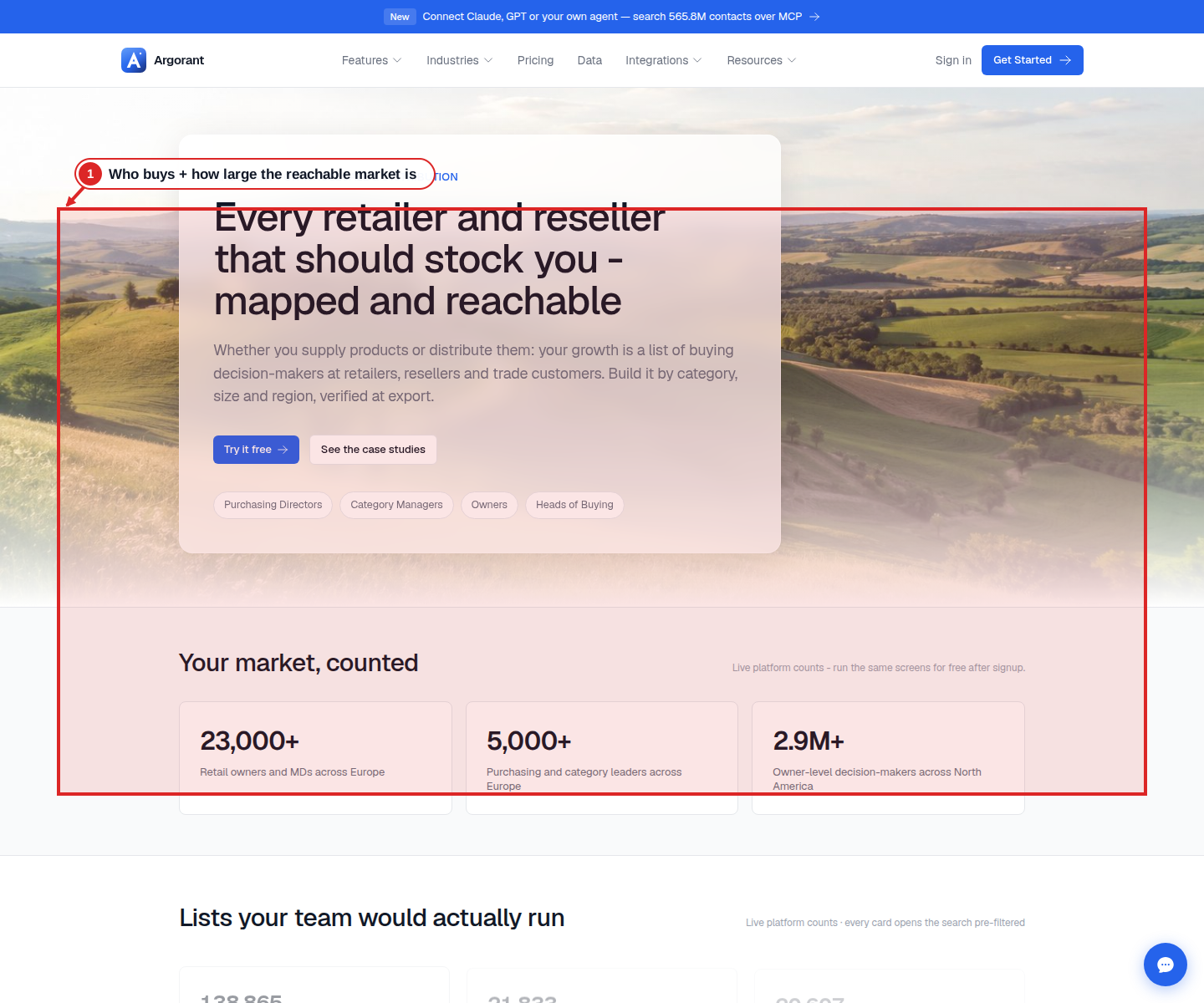
The right trade data depends on direction. If you need suppliers, prioritize taxonomy, capability, certification, and sourcing context. If you need new stockists or trade customers, prioritize account coverage, buying roles, verified contacts, and territory workflow. A provider can be excellent on one side and irrelevant on the other.
Frequently asked questions
What is the difference between a supplier directory and B2B contact data?
A supplier directory helps buyers discover and qualify companies by product, capability, and certification. Contact data identifies the people inside a target company. They solve adjacent but different jobs.
Which roles should wholesalers and suppliers target?
Common roles include Purchasing Director, Category Manager, Head of Buying, Procurement Director, merchandising leadership, and owner or Managing Director at smaller trade customers.
Does a directory profile mean a company is ready to buy?
No. A profile proves presence in a network or directory. Active requests and sourcing behavior are stronger signals, but they still require qualification.
How should a distributor evaluate regional data coverage?
Run a worked territory test by product category, company type, and buyer role. Inspect local naming, branches, duplicates, direct-contact availability, and whether the taxonomy matches how the market actually buys.
Sources reviewed
Each source links to the vendor's current public product or documentation page. Vendor counts and performance statements remain attributed claims, not independent audit results.
6 sources checked and datedShow sources
Test the market definition
before buying the list.
Count and preview the segment, then reveal or export verified contacts only after the criteria hold up.