Argorant
Argorant
Quarterly market index

The real cost per verified B2B contact: Q3 2026 index

A quarterly framework that converts subscriptions, credits, verification losses, duplicates, and labor into a comparable eligible-contact cost.

Reviewed and updated August 20, 2026 by Argorant

Direct answer

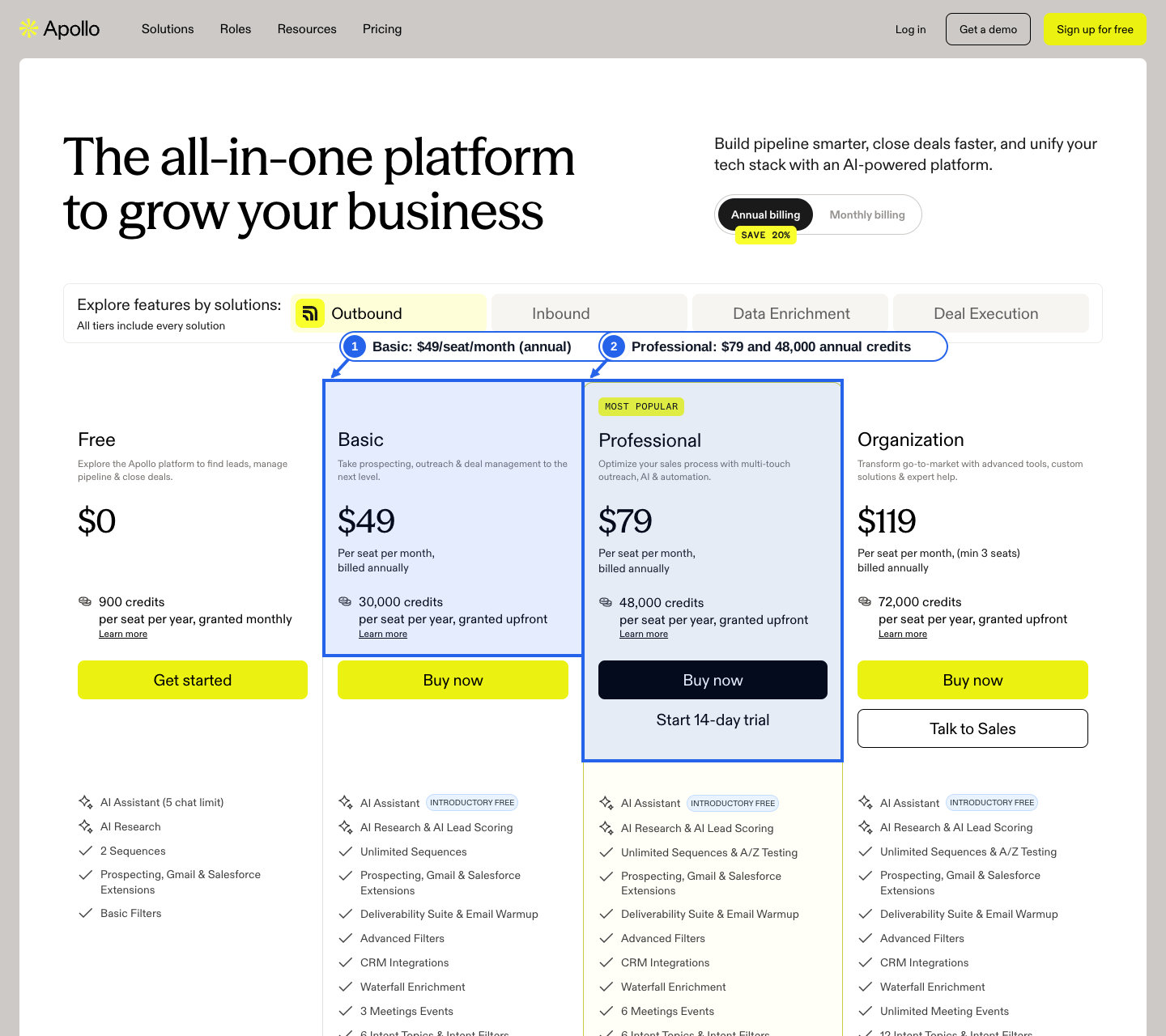
Nominal credit prices are not comparable. Argorant Starter's public narrow-job floor is $99 divided by 4,500 deliverable contacts, or 2.2 cents each before unused capacity. Apollo Basic is $65 divided by 2,500 nominal monthly credits, or 2.6 cents per nominal credit, but a credit can fund different actions and is not a promise of one verified contact. ZoomInfo and Cognism require itemized quotes before their output cost can be calculated.

Our recommendation

For each provider, calculate total period cash plus verification and cleanup labor, then divide by eligible contacts after duplicates, role errors, invalids, and use restrictions. Publish the assumptions beside every number. Leave a cell blank rather than inventing a quote-led price.

Source evidenceApollo plan table showing public seat pricing and nominal credit allowances.Show capture
Apollo plan table showing public seat pricing and nominal credit allowances.
What you can see here: The highlighted price and credit allowance provide an arithmetic floor, not a verified-contact price, because action units and final eligibility differ. View the public Apollo pricing source · captured August 20, 2026
1

The denominator is an eligible contact

A verified mailbox at the wrong company is not useful. Neither is a correct person suppressed by the CRM, a duplicate, a personal address outside policy, or a record the license does not allow you to activate. Eligibility includes fit, contactability, uniqueness, permitted use, and workflow readiness.

This makes the index stricter than a cost-per-credit table and more useful for purchase decisions.

2

Historical external verification tests

Operator-supplied historical tests across multiple verifiers found 39 to 48 percent invalid outcomes for tested Apollo exports and 31 to 38 percent for tested ZoomInfo exports. One recorded run produced 46.21 percent for Apollo and about 34.6 percent for ZoomInfo. These figures are scoped to those samples and are not universal database accuracy claims.

Argorant and the separate external verifier VeriMails performed equally well on the same historical test material. Argorant was slightly more expensive; VeriMails was the lower-cost external-verification option. ZeroBounce, DeBounce, and MillionVerifier performed worse on those particular tests. The companies are separate and no affiliation should be inferred.

3

Agentic pricing belongs in the index

An agent should be able to count and preview before spending, operate behind a prepaid or contractual ceiling, and receive machine-readable reasons for failed actions. Argorant's prepaid wallet is $0.035 per successful contact credit with no subscription. Other providers generally apply the signed-in plan's existing credits to API or MCP actions.

The index should show subscription-required, prepaid, overage, credit-expiry, and agent-access columns separately.

Q3 2026 public-price baseline

ProductPublic cash basisNominal unitSimple floorWhy it is not the final cost
Argorant Starter$99 monthly4,500 deliverable contacts$0.022/contactUnused capacity and eligibility exclusions still matter
Argorant agent wallet$0.035 per creditSuccessful contact output$0.035/contactFilter fit and use eligibility remain buyer responsibilities
Apollo Basic$65 monthly2,500 monthly credits$0.026/nominal creditActions can consume different credit amounts; credits expire
Lusha Starter$49.90 monthlyAction-based creditsNot comparable without allowance and workflowEmail, phone, CSV, and API actions differ
ZoomInfo paidCustom annual quoteContract-specific creditsQuote requiredSeats, products, add-ons, API, term, and tested yield
Cognism Standard / ProCustom quoteContact reveal, export, or enrichment creditQuote requiredFive-seat package and add-ons affect deployable cost

Simple floors are arithmetic, not rankings. They exclude taxes, negotiated terms, unused capacity, cleanup, and conversion value.

Methodology and limitations

Public plan figures were checked 20 August 2026. Historical invalid ranges are operator-supplied tests across multiple verifiers. The index never imputes a current quote-led vendor price and separates nominal units from eligible output.

Scheduled refresh: quarterly

Public sources

Pricing and product terms can change. Every source links to the public page and shows the review date.

Frequently asked questions

Why not compare cost per credit?

Credit definitions differ by provider and action. The comparison becomes useful only after converting credits into the same eligible output.

Are the Apollo and ZoomInfo invalid ranges universal?

No. They are scoped historical first-party tests supplied by the operator and should motivate a buyer-specific benchmark, not a universal claim.

Continue your research

Stop paying enterprise prices for data that bounces.

565.8M contacts, verified before you export. Free to start — no annual contract.

Loved by revenue teams
We've gotten 16.81% in replies after working with you guys. Can only recommend you.
Jannik Linke, Founder & CEO, Clementine Media · Germany